 Gus Nur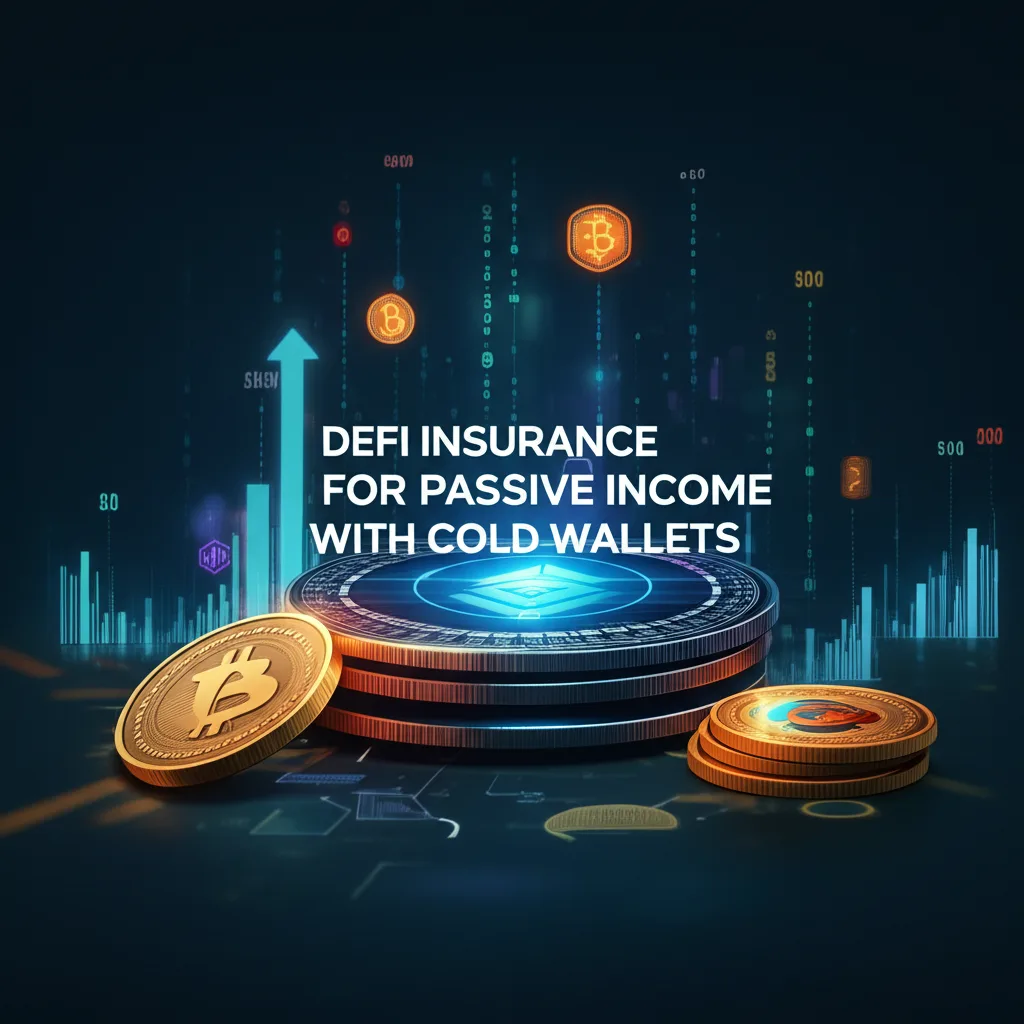
The landscape of digital finance is rapidly evolving, presenting both unprecedented opportunities and unique challenges. As more individuals explore the potential of Decentralized Finance (DeFi) for wealth generation, the inherent risks associated with this nascent technology become increasingly apparent. This article delves into a powerful strategy for mitigating these risks while still pursuing financial growth: Defi Insurance for Passive Income With Cold Wallets. We will explore how combining the innovative risk-sharing mechanisms of DeFi insurance with the robust security of cold wallets can create a more resilient framework for earning passive income in the decentralized ecosystem. Understanding this synergy is crucial for anyone looking to navigate the complexities of crypto and blockchain, securing their digital assets, and confidently participating in the Web3 revolution, potentially well into 2025 and beyond.
TL;DR
- DeFi insurance offers protection against smart contract exploits, oracle failures, and other risks inherent in decentralized applications.
- Passive income can be generated by participating in DeFi insurance protocols, such as by providing liquidity to underwriting pools or staking governance tokens.
- Cold wallets provide the highest level of security for storing the underlying digital assets, safeguarding private keys from online threats.
- Combining DeFi insurance with cold wallets creates a robust strategy for securing assets used to generate passive income, mitigating risks from both protocol vulnerabilities and external attacks.
- This approach helps build confidence in leveraging DeFi for long-term financial growth.
Understanding the Landscape: DeFi, Passive Income, and Cold Wallets
Decentralized Finance (DeFi) represents a paradigm shift in financial services, offering open, permissionless access to lending, borrowing, trading, and asset management without intermediaries. Within this ecosystem, numerous avenues exist for generating passive income, from staking and yield farming to providing liquidity. However, the innovative nature of DeFi also introduces unique risks, including smart contract vulnerabilities, oracle manipulation, and economic exploits.
A cold wallet, also known as hardware wallet, is a device that stores a user’s private keys offline, providing the highest level of security against hacking and online threats. While a cold wallet secures your keys, it doesn’t directly protect the assets once they are actively engaged in a DeFi protocol, which is where DeFi insurance steps in.
What is DeFi Insurance? Protecting Your Digital Assets
DeFi insurance is a decentralized, community-driven approach to risk management within the blockchain space. Unlike traditional insurance, which relies on centralized entities and extensive underwriting processes, DeFi insurance protocols leverage smart contracts and community governance to assess risk, collect premiums, and pay out claims. These protocols offer coverage for a range of specific risks associated with decentralized applications (dApps) and tokens, including:
- Smart Contract Exploits: Protection against bugs or vulnerabilities in the code of a DeFi protocol that lead to loss of funds.
- Oracle Failures: Coverage for losses resulting from incorrect or manipulated data feeds used by smart contracts.
- Stablecoin De-pegging: Insurance against a stablecoin losing its peg to the underlying asset (e.g., USD).
- Exchange Hacks (Centralized): Some protocols may offer limited coverage for funds held on centralized exchanges.
- Slashing Events: For Proof-of-Stake (PoS) validators, protection against penalties for network misbehavior.
The core idea is a peer-to-peer risk-sharing model where participants contribute capital to a common pool, and in return, they can purchase coverage for their digital assets or stake capital to earn premiums by underwriting risks.
Generating Passive Income Through DeFi Insurance
DeFi insurance isn’t just about protection; it’s also a robust avenue for earning passive income. Participants can contribute to the ecosystem in several ways:
- Providing Liquidity to Underwriting Pools: By depositing crypto assets (e.g., stablecoins, ETH) into an insurance protocol’s capital pool, users become "underwriters." They earn a share of the premiums paid by those who purchase coverage. This model allows the protocol to have sufficient funds to pay out claims. The returns are typically proportional to the amount of capital provided and the demand for coverage.
- Staking Governance Tokens: Many DeFi insurance protocols issue their own governance tokens. Holders can stake these tokens to participate in the protocol’s governance (e.g., voting on claims, risk parameters) and often earn a portion of the protocol’s revenue (e.g., premiums, fees) or additional token rewards. Staking also helps secure the network and align incentives.
- Assessing Claims: Some protocols incentivize community members to review and vote on submitted claims. Successful participation in this process can earn rewards, contributing to passive income.
The yield generated from these activities can vary significantly based on market conditions, the specific protocol, and the level of risk undertaken. As the DeFi space matures towards 2025, we anticipate more sophisticated models for risk assessment and yield generation within these platforms.
Leveraging Defi Insurance for Passive Income With Cold Wallets
This is where the ultimate security strategy comes into play. While DeFi insurance protects your assets from protocol-level risks, a cold wallet protects your private keys from external threats like malware, phishing, and remote hacks.
Here’s how to integrate them for a comprehensive security posture:
- Secure Your Base Assets with a Cold Wallet: Before engaging with any DeFi protocol, ensure your primary holdings – the crypto assets you intend to use for generating passive income (e.g., ETH, stablecoins for liquidity pools, governance tokens for staking) – are securely stored in a cold wallet. This means the private keys never touch an internet-connected device.
- Interact with DeFi Protocols via Your Cold Wallet: When you decide to provide liquidity to an insurance pool or stake governance tokens, you will connect your cold wallet to the DeFi protocol’s interface. All transactions (depositing funds, staking, claiming rewards) are initiated on your computer but must be physically confirmed on your cold wallet device. This ensures that even if your computer is compromised, your private keys remain safe, and no unauthorized transactions can occur.
- Purchase Coverage (if desired) for Your Engaged Assets: If you’re providing liquidity to a separate yield farming protocol or staking on a high-risk platform, you can then use a DeFi insurance protocol to purchase coverage for those specific assets against smart contract exploits or other defined risks. While the assets are active in the yield-generating protocol, the insurance provides a safety net.
- Manage Insurance-Related Assets Securely: If you’re providing liquidity to an insurance pool itself to earn premiums, those assets will be within the insurance protocol’s smart contracts. Your cold wallet ensures that your access to these assets (and any earned rewards) remains secure, requiring physical confirmation for withdrawals or claims.
This multi-layered approach ensures that your journey into Web3 passive income is as secure as possible. Your digital assets are protected at rest by the cold wallet, and their engagement in DeFi protocols is safeguarded against specific technical risks by DeFi insurance.
Practical Considerations for 2025
As the DeFi ecosystem matures, we can expect:
- Increased Sophistication of Coverage: More granular and customizable insurance products for specific types of risks and protocols.
- Better User Interfaces: Streamlined processes for purchasing coverage and participating in underwriting pools.
- Regulatory Clarity: While still evolving, clearer regulatory frameworks may emerge, influencing how these services operate.
- Cross-Chain Insurance: Solutions that cover assets and risks across multiple blockchain networks.
Examples of DeFi Insurance Protocols
While not exhaustive and subject to change, here are some prominent examples of DeFi insurance protocols:
- Nexus Mutual: One of the pioneers in the space, Nexus Mutual operates as a discretionary mutual, where members collectively decide on claims. It offers coverage for smart contract exploits and oracle failures.
- InsurAce: Provides a suite of insurance products, including smart contract vulnerability coverage, stablecoin de-peg insurance, and even coverage for centralized exchange hacks. It aims for a more traditional insurance-like experience with fixed premiums.
- Bridge Mutual: A decentralized, peer-to-peer discretionary insurance platform that allows users to provide and purchase coverage for smart contracts, stablecoins, and exchanges.
- Cover Protocol (Defunct): An example of a protocol that experienced challenges, highlighting the inherent risks even within insurance platforms. This underscores the importance of thorough due diligence.
When choosing a protocol, always research its track record, audit reports, community governance, and risk assessment methodology.
Risks and Disclaimer
Risk Notes:
- Smart Contract Risk of the Insurance Protocol Itself: While DeFi insurance aims to mitigate smart contract risk, the insurance protocol’s own smart contracts are also subject to potential vulnerabilities.
- Underwriting Risk: Providing liquidity to an insurance pool means you are underwriting risk. If a large claim occurs, your deposited capital may be used to pay it out, potentially leading to losses.
- Impermanent Loss (if applicable): Some protocols might involve liquidity pools where impermanent loss could be a factor, though less common in pure insurance underwriting.
- Governance Risk: Decisions made by the protocol’s governance token holders can impact the protocol’s stability and your investment.
- Liquidity Risk: Depending on the protocol, withdrawing your capital from underwriting pools might be subject to lock-up periods or require sufficient liquidity in the pool.
- Regulatory Risk: The regulatory landscape for DeFi and crypto is still evolving, and future regulations could impact these protocols.
Simple Disclaimer:
This article is for informational purposes only and does not constitute financial advice. Investing in cryptocurrency and DeFi carries significant risks, including the potential loss of principal. Always conduct your own thorough research (DYOR) and consult with a qualified financial advisor before making any investment decisions. The specific protocols mentioned are examples and not recommendations.
Frequently Asked Questions (FAQ)
Q1: Can I really earn "passive income" from DeFi insurance?
A1: Yes, by providing liquidity to an insurance protocol’s capital pools (underwriting risk) or by staking the protocol’s governance tokens, you can earn a share of the premiums or token rewards, generating passive income.
Q2: Does a cold wallet store my insurance policy?
A2: No, a cold wallet stores your private keys, which give you access to your digital assets. The insurance policy itself is a record on the blockchain (a smart contract interaction). Your cold wallet secures the assets you might use to pay for the policy or the assets you’re using to underwrite policies.
Q3: What types of risks does DeFi insurance typically cover?
A3: DeFi insurance primarily covers smart contract exploits, oracle failures, and stablecoin de-pegging. Some protocols may also offer limited coverage for centralized exchange hacks or slashing events. It does not typically cover market volatility or user errors.
Q4: Is DeFi insurance as reliable as traditional insurance?
A4: DeFi insurance is a newer, evolving field with different mechanisms. It offers a decentralized alternative but comes with its own set of smart contract and governance risks. It’s not directly comparable to traditional insurance due to fundamental structural differences and varying regulatory oversight.
Q5: How do I choose the right DeFi insurance protocol?
A5: Look for protocols with a strong track record, clear documentation, audited smart contracts, active community governance, and transparent risk assessment models. Research the specific coverage offered and the potential returns/risks for liquidity providers.
Q6: Can I lose my funds even with DeFi insurance and a cold wallet?
A6: While combining DeFi insurance with a cold wallet significantly reduces risk, no security measure is 100% foolproof. You could still lose funds due to smart contract vulnerabilities within the insurance protocol itself, extreme market volatility, or if the specific risk you face isn’t covered by your policy. A cold wallet protects your keys, but if you sign a malicious transaction, your funds can still be lost.
Conclusion
The journey into Decentralized Finance offers unprecedented opportunities for financial growth and autonomy. However, navigating this frontier requires a robust understanding of both its potential and its inherent risks. By strategically combining Defi Insurance for Passive Income With Cold Wallets, individuals can build a comprehensive security framework for their digital assets. Cold wallets provide foundational security by safeguarding private keys, while DeFi insurance offers a crucial layer of protection against the specific technical risks of smart contracts and protocol vulnerabilities. This synergistic approach empowers users to confidently participate in the Web3 economy, pursue passive income opportunities, and manage their crypto assets with greater peace of mind, positioning them securely for the evolving digital financial landscape of 2025 and beyond.







 Rifan Muazin
 Egi Sujana
 Dokter Tifa