
 Dokter Tifa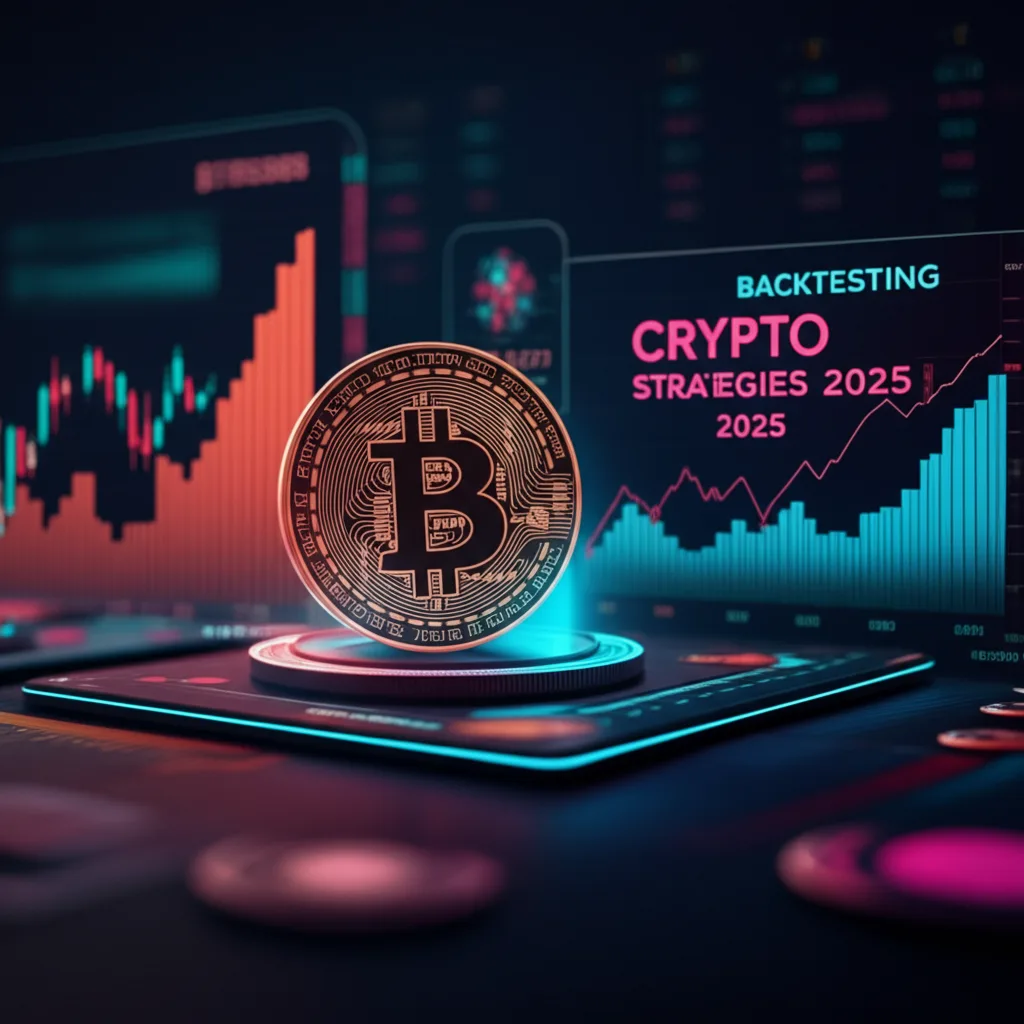
The dynamic world of cryptocurrencies, with its rapid innovations in blockchain technology, Web3 applications, and decentralized finance (DeFi), presents both immense opportunities and significant challenges for traders and investors. As we look towards 2025, the imperative to rigorously test investment hypotheses before deploying capital becomes more critical than ever. This article delves into the crucial discipline of backtesting crypto strategies 2025 real-world examples, providing a data-driven approach to evaluating the potential performance of your digital asset trading systems. Understanding how a strategy would have performed historically is the cornerstone of building robust, forward-looking trading plans in this evolving market.
TL;DR
- Backtesting is essential for evaluating crypto trading strategies using historical data.
- It helps identify potential profitability, risks, and weaknesses before live trading.
- Unique crypto challenges include high volatility, data quality issues, and significant transaction costs (gas fees).
- Real-world examples demonstrate backtesting for trend-following, arbitrage, and DeFi liquidity provision.
- Key considerations: data quality, avoiding overfitting, accounting for transaction costs, and market microstructure.
- Various tools and programming languages (e.g., Python with Backtrader) facilitate backtesting.
- Always combine backtesting with forward testing and risk management; past performance is not indicative of future results.
Understanding Backtesting in the Crypto Landscape
Backtesting is the process of testing a trading strategy using historical data to determine its viability. It’s akin to a simulation, allowing you to replay market conditions and observe how your strategy would have performed without risking actual capital. For the crypto landscape, where volatility can be extreme and market dynamics shift rapidly, backtesting is not just a best practice—it’s a necessity.
The unique characteristics of digital assets, such as their 24/7 trading nature, fragmented liquidity across numerous exchanges, and the constant evolution of new tokens and DeFi protocols, make traditional backtesting methodologies require adaptation. By 2025, with increased institutional participation, evolving regulatory frameworks, and advanced Web3 infrastructure, the complexity will only deepen. Effective backtesting helps investors navigate these complexities, offering a quantitative edge.
Backtesting Crypto Strategies 2025 Real-World Examples
To illustrate the practical application of backtesting, let’s explore a few real-world examples that highlight different strategy types and their associated challenges in the context of the crypto market, keeping an eye on considerations relevant for 2025.
Example 1: Trend-Following Strategy on Ethereum (ETH)
Strategy: A simple moving average (SMA) crossover strategy.
Logic: Buy when the 50-period SMA crosses above the 200-period SMA (golden cross), and sell/short when the 50-period SMA crosses below the 200-period SMA (death cross). This strategy aims to capture longer-term trends.
Data Required:
- Historical daily closing prices for Ethereum (ETH/USD or ETH/USDT) from a reliable exchange like Binance or Coinbase, spanning several years (e.g., 2018-2024).
- Volume data can also be incorporated to confirm trend strength.
Backtesting Process (Conceptual):
- Data Acquisition: Download clean historical ETH price data.
- Indicator Calculation: Compute the 50-period and 200-period SMAs for each day.
- Signal Generation: Identify buy and sell signals based on the crossover rules.
- Trade Execution: Simulate trades at the closing price of the day the signal is generated.
- Performance Metrics: Calculate key metrics:
- Total Return: Overall profit/loss.
- Maximum Drawdown: The largest peak-to-trough decline in portfolio value.
- Win Rate: Percentage of profitable trades.
- Profit Factor: Gross profit divided by gross loss.
- Sharpe Ratio: Risk-adjusted return.
- Calmar Ratio: Measures return per unit of drawdown.
Simulated Results & 2025 Considerations:
A backtest of this strategy from 2020-2024 might show significant gains during bull runs but also considerable drawdowns during extended bear markets or periods of sideways consolidation. For instance, a hypothetical backtest might reveal a 300% return over a four-year period but with a maximum drawdown of 60%.
In 2025, factors like the increasing efficiency of markets due to sophisticated algorithms, the impact of Ethereum’s scalability upgrades, and potential regulatory clarity might alter the effectiveness of such simple trend-following strategies. Transaction costs, while typically lower for spot trading on centralized exchanges compared to DeFi, must still be factored in. Slippage, especially for larger orders during volatile periods, can also eat into profits.
Example 2: Arbitrage Strategy Across Decentralized Exchanges (DEXs)
Strategy: Identifying and exploiting fleeting price differences for the same token pair across two or more decentralized exchanges (e.g., Uniswap vs. SushiSwap).
Logic: If Token A on DEX1 is cheaper than Token A on DEX2, buy on DEX1 and immediately sell on DEX2, profiting from the spread.
Data Required:
- Real-time and historical price data for specific token pairs from multiple DEXs.
- Historical blockchain transaction fees (gas prices) on Ethereum or other relevant blockchains (e.g., Polygon, BNB Chain).
- Block times and network congestion data.
Backtesting Process (Conceptual):
- Data Collection: Continuously monitor price feeds from target DEXs.
- Opportunity Detection: Identify instances where the price difference, after accounting for estimated gas fees, is profitable.
- Simulation of Execution: Simulate simultaneous buy and sell orders. This is highly challenging due to the real-time nature and network latency.
- Transaction Cost Modeling: Crucially, model gas fees accurately, which can fluctuate wildly. The higher the gas fee, the larger the required spread for profitability.
Simulated Results & 2025 Considerations:
Backtesting arbitrage strategies often reveals that many theoretical opportunities are consumed by transaction costs or are simply too fast to exploit manually. A backtest might show thousands of potential arbitrage opportunities, but once gas fees and execution latency are accounted for, only a fraction remain profitable. The success of such strategies is often tied to high-frequency trading infrastructure and sophisticated smart contracts.
By 2025, advancements in Layer 2 solutions and other scaling technologies could reduce gas fees, potentially making more arbitrage opportunities viable. However, competition from bots will also intensify, requiring increasingly sophisticated algorithms and execution speed. The security of smart contract interactions and front-running risks remain paramount considerations.
Example 3: Liquidity Provision (LP) Strategy in a DeFi Pool
Strategy: Providing liquidity to a decentralized exchange’s automated market maker (AMM) pool (e.g., ETH/USDT on Uniswap V3) to earn trading fees.
Logic: Deposit an equivalent value of two tokens into a pool. Earn a share of trading fees generated by the pool, but face impermanent loss if the price ratio of the deposited assets changes significantly.
Data Required:
- Historical price data for the token pair (e.g., ETH/USDT).
- Historical trading volume within the pool to estimate fee generation.
- Historical impermanent loss data (or calculations based on price history).
- Gas fees for deposit/withdrawal and rebalancing (if applicable).
Backtesting Process (Conceptual):
- Simulation of Deposit: Assume an initial deposit of two tokens at a specific price ratio.
- Impermanent Loss Calculation: Track the change in value of the deposited assets relative to simply holding them (buy and hold) over the backtesting period.
- Fee Earning Calculation: Estimate fees earned based on historical volume and the LP’s share of the pool.
- Net Profit/Loss: Compare total value (initial deposit + earned fees – impermanent loss) against a simple buy-and-hold benchmark.
Simulated Results & 2025 Considerations:
A backtest of an LP strategy over a volatile period might show that while significant fees were earned, they were often outweighed by impermanent loss, especially if the asset pair experienced a strong directional move. For example, providing liquidity to an ETH/USDT pool during a strong ETH bull run might lead to substantial impermanent loss despite accumulating fees.
In 2025, the DeFi landscape is expected to mature, with more sophisticated AMM designs (e.g., concentrated liquidity, dynamic fees) and potential for risk mitigation tools. Backtesting for LP strategies will need to incorporate these evolving mechanisms, alongside considering the impact of network security, oracle reliability, and smart contract audits. The choice of token pair and understanding its correlation will be vital.
Key Considerations for Effective Crypto Backtesting
Data Quality and Availability
The adage "garbage in, garbage out" is particularly true for backtesting. High-quality, granular historical data is paramount. This includes tick data, order book data, and accurate volume information from multiple exchanges. For blockchain-specific strategies (like DeFi), on-chain data (transaction logs, smart contract states) is also crucial. Sourcing reliable data can be a challenge in crypto, as historical data from certain exchanges or defunct tokens might be incomplete or inaccurate. Data cleaning (handling missing values, outliers, errors) is a critical preliminary step.
Overfitting and Robustness
Overfitting occurs when a strategy is too finely tuned to past data, making it perform poorly in future, unseen market conditions. To mitigate this:
- Out-of-Sample Testing: Test the strategy on a portion of data it has never "seen" before.
- Walk-Forward Optimization: Periodically re-optimize the strategy’s parameters on recent data and then test it on the next, entirely new segment.
- Parameter Sensitivity Analysis: Test how robust the strategy’s performance is to small changes in its input parameters. A robust strategy should not drastically alter its performance with minor parameter adjustments.
Transaction Costs and Slippage
These are often underestimated but can significantly impact profitability, especially in high-frequency crypto trading.
- Exchange Fees: Maker/taker fees vary by exchange and trading volume.
- Gas Fees: For on-chain transactions (e.g., interacting with DeFi protocols, moving tokens between wallets), gas fees can be substantial and highly variable. Backtesting must include a realistic model for these costs.
- Slippage: The difference between the expected price of a trade and the price at which the trade is actually executed. It’s more pronounced in illiquid markets or for large orders, common in volatile crypto conditions.
Market Microstructure and Evolution
Crypto markets are constantly evolving. New tokens emerge, DeFi protocols innovate, regulatory environments shift, and Web3 technologies mature. A strategy that worked perfectly in 2021 might be obsolete by 2025. Backtesting should consider:
- Regime Changes: Periods of extreme volatility, regulatory crackdowns, or major technological advancements can fundamentally alter market behavior.
- Liquidity Shifts: Liquidity can migrate between exchanges or protocols, affecting execution quality.
- Innovation Cycle: The rapid pace of innovation means new trading opportunities (and risks) appear frequently.
Tools and Resources for Backtesting Crypto Strategies
Several tools and resources are available for backtesting:
- Programming Libraries (Python):
- Backtrader: A robust framework for backtesting and live trading.
- Freqtrade: An open-source crypto trading bot that includes backtesting capabilities.
- Pandas, NumPy: Fundamental libraries for data manipulation and numerical operations.
- Custom Scripts: Often, traders build their own custom backtesting environments tailored to specific needs, especially for complex DeFi strategies.
- Dedicated Platforms:
- TradingView: Offers a powerful "Pine Script" language for backtesting strategies on various assets, including crypto.
- QuantConnect, Alpaca Markets: Platforms offering algorithmic trading and backtesting environments, with some crypto support.
- Specialized Crypto Backtesting Platforms: A growing number of platforms are emerging specifically for crypto, offering access to high-quality data and tailored tools.
Risk Notes and Disclaimer
Backtesting provides valuable insights but comes with inherent limitations. Past performance is not indicative of future results. Crypto markets are highly volatile, speculative, and subject to rapid, unpredictable changes. There is a substantial risk of loss associated with trading digital assets. This article is for informational purposes only and should not be construed as financial advice. Always conduct your own thorough research, understand the risks involved, and consider consulting with a qualified financial professional before making any investment decisions.
FAQ Section
Q1: Is backtesting reliable for crypto strategies in 2025?
A1: Backtesting is a crucial tool, but its reliability in crypto markets for 2025 depends on the quality of data, the robustness of the strategy against overfitting, and how well it accounts for unique crypto factors like gas fees and rapid market evolution. It provides a historical perspective, not a guarantee of future performance.
Q2: What are the most common pitfalls when backtesting crypto strategies?
A2: Common pitfalls include using poor quality data, overfitting a strategy to historical noise, failing to account for realistic transaction costs (fees, slippage), ignoring the impact of market microstructure changes, and applying strategies designed for traditional markets without adaptation to crypto’s unique volatility and 24/7 nature.
Q3: How much historical data do I need for effective crypto backtesting?
A3: Generally, more data is better, but it must be relevant. Aim for several years of data (e.g., 3-5 years) that covers different market cycles (bull, bear, sideways). For high-frequency strategies, tick-level data might be necessary. Ensure the data’s quality and relevance to the current market structure, especially looking towards 2025.
Q4: Does backtesting account for gas fees and slippage on blockchain transactions?
A4: Not automatically. A robust backtesting framework must explicitly model and incorporate realistic gas fees and estimated slippage, especially for strategies involving DeFi protocols or frequent on-chain transactions. Failing to do so can lead to highly optimistic and unrealistic backtest results.
Q5: Can I backtest complex DeFi strategies, such as yield farming or concentrated liquidity?
A5: Yes, but it’s significantly more complex. Backtesting DeFi strategies requires access to extensive on-chain data (transaction logs, pool states, impermanent loss calculations, oracle prices) and often necessitates custom programming. Specialized tools and APIs are emerging to facilitate this, but it’s an advanced application of backtesting.
Q6: What are the best tools for beginners wanting to backtest crypto strategies in 2025?
A6: For beginners, platforms like TradingView (with Pine Script) offer a user-friendly interface for strategy development and backtesting on various crypto pairs. For those comfortable with coding, Python with libraries like Backtrader provides greater flexibility and control. Starting with simpler strategies and gradually increasing complexity is advisable.
Conclusion
The journey into backtesting crypto strategies 2025 real-world examples reveals that while the core principles remain consistent, the nuances of digital asset markets demand specialized attention. From the extreme volatility of tokens to the intricate mechanics of DeFi and the ever-evolving Web3 landscape, a meticulous and data-driven approach is paramount. By rigorously testing strategies against historical data, accounting for transaction costs, mitigating overfitting, and understanding market microstructure, investors can gain invaluable insights into the potential performance and risks of their trading systems. As the crypto space continues its rapid expansion towards 2025, robust backtesting remains an indispensable tool for developing intelligent, risk-aware, and potentially profitable trading strategies. Remember, backtesting is a powerful simulation, not a crystal ball, but it’s the closest we have to a time machine for evaluating our investment decisions.







 Rifan Muazin
 Egi Sujana
 Gus Nur