 Egi Sujana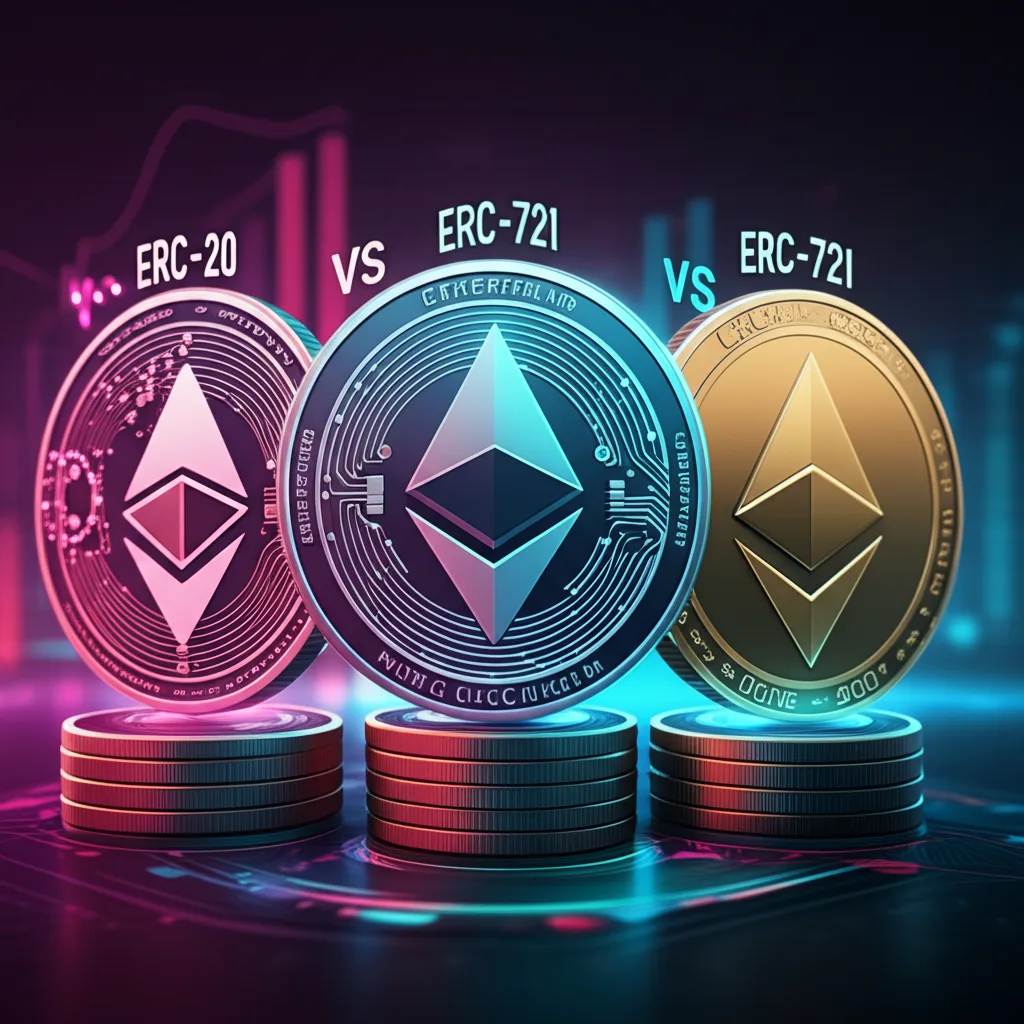
The world of blockchain and decentralized finance (DeFi) is constantly evolving, driven by innovative token standards that power a vast array of digital assets. At the core of the Ethereum ecosystem lie two foundational standards: ERC-20 and ERC-721. These specifications have enabled everything from stablecoins and utility tokens to unique digital collectibles and tokenized real-world assets. As we look towards the future, understanding the ERC-20 Vs ERC-721 Roadmap 2025 becomes crucial for anyone navigating the intricate landscape of Web3. This article will explore the distinct characteristics of these token standards, their current applications, and project their anticipated evolution, challenges, and opportunities in the coming years, offering insights for both beginners and intermediate crypto enthusiasts.
TL;DR
- ERC-20 Tokens: Fungible, interchangeable digital assets primarily used for cryptocurrencies, utility tokens, and governance.
- ERC-721 Tokens: Non-fungible, unique digital assets representing ownership of distinct items like NFTs, digital art, and tokenized real estate.
- Roadmap 2025 for ERC-20: Focus on scalability (Layer 2 solutions), cross-chain interoperability, enhanced DeFi integration, and potential for institutional adoption.
- Roadmap 2025 for ERC-721: Evolution towards greater utility, dynamic NFTs, fractionalization, metaverse integration, and broader tokenization of real-world assets.
- Convergence: Hybrid token standards (e.g., ERC-1155) and wrapped tokens will bridge functionalities.
- Key Drivers: Regulatory clarity, improved security, user experience, and robust Web3 infrastructure will shape both standards.
Understanding the Foundations: ERC-20 and ERC-721
To project their future, we must first understand the fundamental differences and current roles of ERC-20 and ERC-721 tokens. Both are smart contract standards on the Ethereum blockchain, but they serve vastly different purposes due to their inherent properties.
ERC-20: The Standard for Fungible Tokens
The ERC-20 standard defines a common set of rules for fungible tokens. "Fungible" means that each token is identical to another, interchangeable, and holds the same value. Think of a fiat currency like the US dollar; one dollar bill is worth the same as any other dollar bill.
- Key Characteristics:
- Fungibility: Each token is identical and interchangeable.
- Divisibility: Tokens can be broken down into smaller units (e.g., 0.5 ETH).
- Common Functions:
transfer,transferFrom,approve,balanceOf,totalSupply.
- Primary Use Cases:
- Cryptocurrencies: Many altcoins and stablecoins (e.g., USDT, USDC, DAI) are ERC-20 tokens.
- Utility Tokens: Grant access to specific services or features within a decentralized application (dApp).
- Governance Tokens: Allow holders to vote on proposals and steer the direction of a decentralized autonomous organization (DAO).
- Security Tokens: Represent ownership in real-world assets or companies, subject to securities regulations.
ERC-20 tokens form the backbone of the DeFi ecosystem, enabling seamless trading, lending, borrowing, and yield farming across numerous platforms. Their widespread adoption has been critical for the growth of decentralized exchanges (DEXs) and other financial primitives on Ethereum.
ERC-721: The Standard for Non-Fungible Tokens (NFTs)
In contrast, ERC-721 tokens are non-fungible, meaning each token is unique and distinct from every other token. They cannot be interchanged on a one-to-one basis because each possesses unique metadata and value. This standard is synonymous with Non-Fungible Tokens (NFTs).
- Key Characteristics:
- Non-Fungibility: Each token is unique and has its own distinct identity.
- Indivisibility: Generally, tokens cannot be broken down into smaller units (though fractionalization is a developing concept).
- Common Functions:
ownerOf,approve,setApprovalForAll,transferFrom,safeTransferFrom. - Metadata: Each token links to unique data (e.g., image, description, properties) stored off-chain or on decentralized storage solutions like IPFS.
- Primary Use Cases:
- Digital Collectibles: Art, music, videos, trading cards (e.g., CryptoPunks, Bored Ape Yacht Club).
- Gaming Assets: In-game items, characters, virtual land (e.g., Axie Infinity, Decentraland).
- Digital Identity: Unique identifiers, certificates, diplomas.
- Tokenized Real-World Assets: Representation of ownership for physical real estate, luxury goods, intellectual property.
ERC-721 tokens have opened up new frontiers for digital ownership, creativity, and the monetization of unique digital assets, driving significant cultural and economic shifts within Web3.
The Evolving Landscape: ERC-20 Vs ERC-721 Roadmap 2025
The trajectory for both ERC-20 and ERC-721 tokens toward 2025 points to continued innovation, increased utility, and a more integrated blockchain ecosystem.
ERC-20 Roadmap 2025: Scaling DeFi and Beyond
By 2025, ERC-20 tokens are expected to solidify their role as the primary medium of exchange and value transfer within decentralized networks, but with significant improvements in scalability, efficiency, and reach.
- Scalability via Layer 2 Solutions:
- The mass adoption of Layer 2 scaling solutions (e.g., Optimism, Arbitrum, zkSync, Polygon) will make ERC-20 token transactions faster and significantly cheaper. This will enhance the user experience for everyday transactions and complex DeFi strategies, making the Ethereum network more accessible to a global audience.
- Expect seamless bridging and interoperability between Layer 1 Ethereum and various Layer 2 networks, further decentralizing and de-risking the broader crypto ecosystem.
- Cross-Chain Interoperability:
- While Ethereum remains dominant, the growth of other Layer 1 blockchains (e.g., Polkadot, Avalanche, Solana) means a greater emphasis on cross-chain bridges and atomic swaps for ERC-20 tokens. By 2025, moving assets between different blockchain environments will be more streamlined and secure, fostering a truly multi-chain world.
- Enhanced DeFi Integration and Institutional Adoption:
- ERC-20 tokens will continue to power the core of DeFi, with advancements in sophisticated financial instruments, decentralized derivatives, and insurance protocols.
- We anticipate increased participation from traditional financial institutions. Regulated ERC-20 stablecoins and security tokens will see broader adoption in traditional finance, bridging the gap between legacy systems and blockchain technology. Clearer regulatory frameworks will facilitate this.
- Token Standard Evolution:
- While ERC-20 remains foundational, hybrid standards like ERC-1155 (multi-token standard, supporting both fungible and non-fungible tokens) will gain prominence for projects requiring diverse token functionalities within a single contract. This allows for more efficient contract deployment and management.
ERC-721 Roadmap 2025: Utility, Interoperability, and Real-World Integration
For ERC-721 tokens, the future is less about raw transaction efficiency and more about unlocking deeper utility, expanding into new verticals, and integrating with emerging digital economies.
- Utility Beyond Collectibles:
- While digital art and collectibles will remain a strong segment, the focus will shift towards NFTs with embedded utility. This includes access tokens for exclusive communities or events, verifiable credentials, digital licenses, and dynamic NFTs that change based on external data or user interaction.
- Dynamic NFTs (dNFTs): These will evolve, allowing metadata to change based on specific conditions (e.g., an in-game item upgrading, an identity token updating with new certifications).
- Fractionalization and Liquidity:
- The fractionalization of high-value ERC-721 assets (e.g., a Picasso NFT split into 1,000 ERC-20 tokens) will increase liquidity and accessibility for broader investor participation. This makes previously exclusive assets available to a wider audience, democratizing ownership.
- Metaverse and Gaming Integration:
- NFTs will be central to the burgeoning metaverse, serving as digital identities (avatars), virtual land ownership, and interoperable in-game assets across different platforms. By 2025, seamless transfer and usage of NFTs between various metaverse environments will become a key driver for adoption.
- Real-World Asset (RWA) Tokenization:
- The tokenization of physical assets like real estate, art, and intellectual property using ERC-721 will gain traction. This offers increased liquidity, transparency, and fractional ownership opportunities, potentially revolutionizing traditional asset markets. Legal and regulatory frameworks will be critical for this expansion.
- Enhanced Security and Authenticity:
- Improvements in blockchain forensics and anti-counterfeiting measures will bolster the authenticity and security of NFTs, building greater trust in the digital ownership paradigm.
Challenges and Opportunities Towards 2025
Both token standards face common challenges and opportunities as they evolve:
- Regulatory Clarity: Governments worldwide are grappling with how to classify and regulate digital assets. Clear, consistent regulations are crucial for mainstream adoption and institutional investment, especially for security tokens and RWA tokenization.
- Scalability and User Experience (UX): While Layer 2s help, continuous efforts are needed to make blockchain interactions as seamless and cost-effective as traditional web applications. Gas fees and transaction speeds remain a hurdle for mass adoption.
- Security: Smart contract vulnerabilities, phishing scams, and bridge exploits pose ongoing risks. Enhanced auditing, formal verification, and user education are paramount.
- Interoperability: The ability for tokens to move and function across different blockchains and even traditional systems is key to unlocking the full potential of Web3.
- Environmental Concerns: The energy consumption of Proof-of-Work blockchains (though Ethereum has transitioned to Proof-of-Stake) remains a concern for some, driving innovation in more energy-efficient consensus mechanisms.
The opportunities are immense: a more inclusive global financial system, new forms of digital ownership and creativity, enhanced supply chain transparency, and entirely new digital economies powered by these versatile token standards.
Risks and Disclaimer
Investing in cryptocurrencies and digital assets carries significant risks, including but not limited to market volatility, regulatory changes, technological vulnerabilities, and potential loss of principal. The information provided in this article is for educational and informational purposes only and should not be construed as financial advice. Always conduct your own thorough research and consult with a qualified financial professional before making any investment decisions. The future developments projected for 2025 are speculative and subject to change.
FAQ Section
Q1: What is the main difference between ERC-20 and ERC-721 tokens?
A1: The main difference is fungibility. ERC-20 tokens are fungible, meaning each token is identical and interchangeable (like currency). ERC-721 tokens are non-fungible, meaning each token is unique and distinct, representing a singular item or asset (like a unique piece of art).
Q2: Will ERC-20 tokens become obsolete with the rise of NFTs (ERC-721)?
A2: No, ERC-20 tokens will not become obsolete. They serve fundamentally different purposes. ERC-20 tokens are essential for currencies, utility, and governance, forming the backbone of DeFi. ERC-721 tokens excel at representing unique ownership. Both are complementary and crucial for a robust blockchain ecosystem.
Q3: What are "hybrid" token standards like ERC-1155, and how do they fit into the Roadmap 2025?
A3: ERC-1155 is a multi-token standard that allows a single smart contract to manage both fungible (like ERC-20) and non-fungible (like ERC-721) tokens. By 2025, hybrid standards are expected to gain prominence as projects seek more efficient and versatile ways to manage diverse digital assets within a single ecosystem, especially in gaming and metaverse applications.
Q4: How will scalability improvements impact ERC-20 and ERC-721 by 2025?
A4: Scalability improvements, primarily through Layer 2 solutions, will significantly reduce transaction costs and increase speeds for both token types. For ERC-20, this means more efficient trading and DeFi interactions. For ERC-721, it enables more frequent and complex interactions with NFTs, such as in gaming or dynamic NFT updates, without prohibitive gas fees.
Q5: What role will real-world asset tokenization play for ERC-721 in the coming years?
A5: By 2025, real-world asset (RWA) tokenization using ERC-721 is expected to expand significantly. This involves representing ownership of physical assets like real estate, luxury goods, or intellectual property on the blockchain. It aims to increase liquidity, transparency, and enable fractional ownership of traditionally illiquid assets, bridging the gap between physical and digital economies.
Q6: What are the main security considerations for these tokens moving towards 2025?
A6: Key security considerations include preventing smart contract vulnerabilities through rigorous auditing, protecting users from phishing and scam attacks, and ensuring the integrity of cross-chain bridges. As the value stored in these tokens increases, so does the incentive for malicious actors, necessitating continuous improvements in security protocols and user education.
Conclusion
The evolution of ERC-20 and ERC-721 tokens is a testament to the dynamic innovation within the blockchain space. As we navigate the ERC-20 Vs ERC-721 Roadmap 2025, it’s clear that both standards will continue to play pivotal, yet distinct, roles in shaping the future of digital assets and Web3. ERC-20 will remain the bedrock of decentralized finance, evolving to become more scalable, interoperable, and integrated with traditional financial systems. Concurrently, ERC-721 will unlock unprecedented utility for unique digital ownership, driving innovation in metaverses, gaming, and the tokenization of real-world assets. Understanding their individual strengths, anticipated developments, and the challenges they face is essential for anyone looking to build, invest, or simply participate in the ever-expanding crypto economy. The journey towards 2025 promises a more sophisticated, accessible, and integrated digital landscape, powered by these foundational token standards.





 Rifan Muazin
 Gus Nur
 Dokter Tifa