
 Gus Nur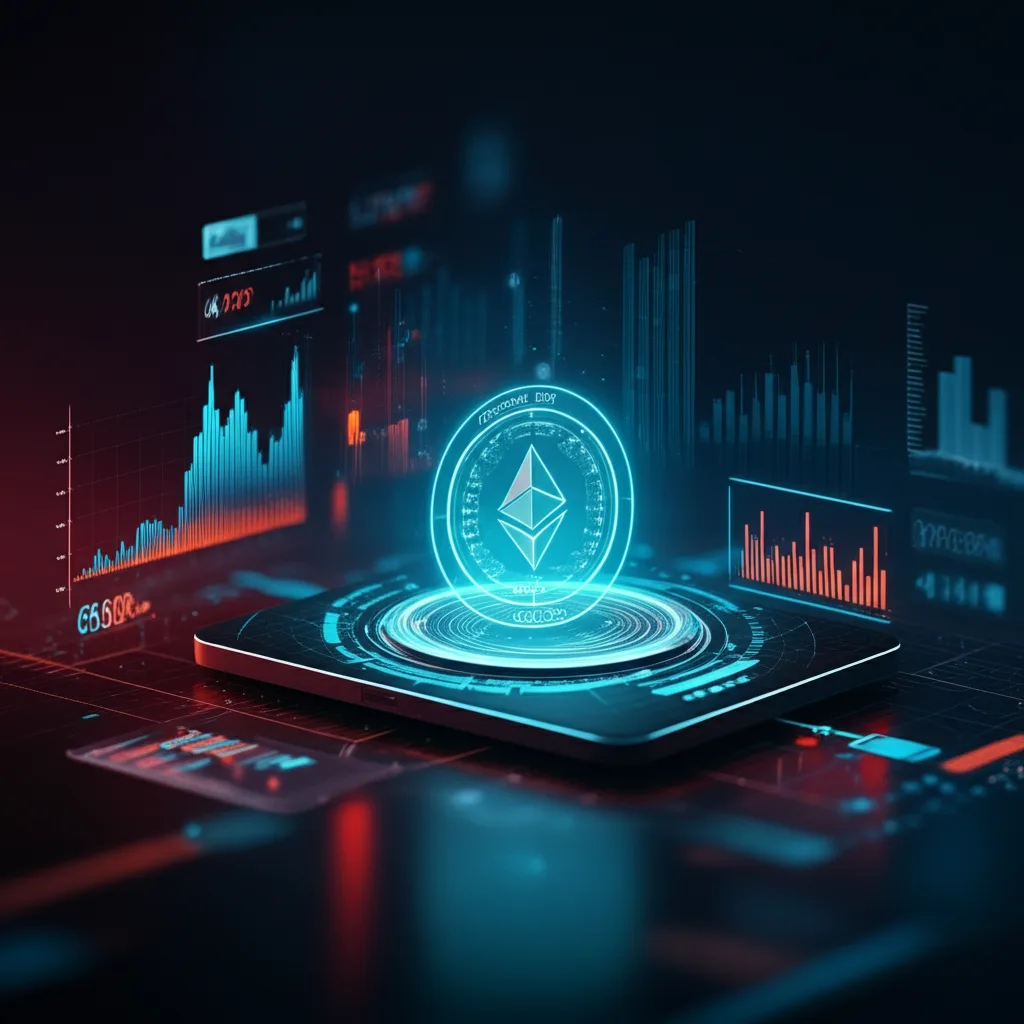
The landscape of decentralized finance (DeFi) is constantly evolving, with decentralized exchanges (DEXs) at its very core. Among the various DEX models, order-book DEXs stand out for their familiar structure, mirroring traditional financial markets. As the crypto ecosystem matures, the focus shifts towards enhancing the capabilities, efficiency, and accessibility of these platforms. This article delves into the anticipated "Order-book Dexs Roadmap 2025," exploring the key innovations, challenges, and advancements poised to reshape how we trade digital assets in a truly decentralized manner. From scalability solutions to advanced trading features and robust security, we’ll uncover the strategic directions that will define the next generation of decentralized order-book trading.
TL;DR: Order-book Dexs Roadmap 2025 Key Highlights
- Enhanced Scalability: Integration of Layer 2 solutions (ZK-Rollups, Optimistic Rollups) and off-chain matching engines to boost transaction speed and reduce fees.
- Superior User Experience: Intuitive interfaces, mobile compatibility, and streamlined wallet integrations for broader Web3 adoption.
- Advanced Trading Tools: Implementation of sophisticated order types (stop-loss, take-profit) and liquidity aggregation for a CEX-like trading experience.
- Cross-Chain Interoperability: Development of robust bridges and protocols for seamless trading of tokens across multiple blockchains.
- Institutional Readiness: Introduction of permissioned pools, KYC/AML solutions, and support for tokenized real-world assets to attract institutional capital.
- Robust Security & Governance: Continued focus on smart contract audits, decentralized governance models, and adaptive regulatory compliance.
The Evolution of Decentralized Exchanges: Why Order Books Matter
Decentralized exchanges have fundamentally altered the way users interact with crypto, removing the need for intermediaries and empowering individuals with greater control over their digital assets. While Automated Market Makers (AMMs) like Uniswap have gained immense popularity for their simplicity and liquidity provision, order-book DEXs offer a different paradigm, more akin to traditional stock exchanges. They rely on users placing bids and asks, creating a transparent order book that dictates price discovery and execution.
The advantages of order-book models are compelling: they allow for more precise price control, facilitate a wider range of order types (e.g., limit orders), and can offer deeper liquidity at specific price points. However, early iterations of on-chain order-book DEXs faced significant hurdles, primarily high gas fees, slow transaction finality, and a clunky user experience on congested blockchains. The "Order-book Dexs Roadmap 2025" is largely focused on overcoming these foundational challenges to unlock their full potential.
Addressing Core Challenges: Scalability and Performance in 2025
The biggest bottleneck for on-chain order-book DEXs has historically been scalability. Processing every order, cancellation, and trade settlement directly on a Layer 1 blockchain like Ethereum is computationally intensive and expensive. The year 2025 will see a definitive shift towards sophisticated solutions to alleviate these issues.
Layer 2 Solutions: The adoption of Layer 2 (L2) scaling solutions will be paramount.
- ZK-Rollups (Zero-Knowledge Rollups): These solutions bundle thousands of transactions off-chain into a single cryptographic proof, which is then submitted to the mainnet. This significantly reduces gas costs and increases throughput while inheriting the security of the underlying blockchain. Order-book DEXs built on ZK-Rollups like StarkNet or zkSync will offer near-instantaneous trades at minimal cost.
- Optimistic Rollups: Similar to ZK-Rollups, Optimistic Rollups process transactions off-chain and then post a compressed version to the mainnet. They assume transactions are valid unless challenged within a specific timeframe. Platforms leveraging Optimism or Arbitrum will provide high throughput for order-book operations.
Blockchain Infrastructure Improvements: Beyond L2s, the underlying blockchain infrastructure will also play a role. The continued development of sharding (e.g., Ethereum 2.0’s roadmap) and the emergence of high-performance Layer 1 blockchains specifically designed for rapid transaction processing will offer alternative or complementary environments for order-book DEXs.
Off-chain Matching Engines: Many order-book DEXs are already employing hybrid models where the order matching occurs off-chain, while settlement of funds remains securely on-chain. This balances the need for speed and low cost with the core tenets of decentralization. In 2025, these off-chain components will become even more robust, offering verifiable computation and ensuring fair order execution.
Enhancing User Experience and Accessibility for the Order-book Dexs Roadmap 2025
For order-book DEXs to truly compete with their centralized counterparts, the user experience (UX) must be seamless and intuitive. The 2025 roadmap places a strong emphasis on refining interfaces and simplifying access to Web3 trading.
Intuitive UI/UX: Expect sleek, responsive, and highly customizable interfaces that cater to both novice and professional traders. Features like dark mode, customizable layouts, and clear visualization of market depth will become standard. Mobile compatibility will also be a major focus, allowing users to manage their digital assets and trade on the go without compromising functionality.
Fiat On/Off-Ramps: Bridging the gap between traditional finance and crypto is crucial for broader adoption. Order-book DEXs will increasingly integrate direct fiat on-ramps, allowing users to convert traditional currencies into crypto tokens directly within the platform, and vice versa. This eliminates the need for users to interact with multiple services, streamlining the entire process.
Improved Wallet Integrations: Seamless integration with popular non-custodial wallets (e.g., MetaMask, WalletConnect-compatible wallets) will be refined. Features like one-click approvals, gas abstraction (paying gas in the traded token), and enhanced security notifications will contribute to a smoother trading experience.
Educational Resources: To onboard the next wave of users into the decentralized world, order-book DEXs will invest in comprehensive educational resources. In-platform tutorials, detailed guides on trading strategies, and explanations of blockchain mechanics will empower new users to navigate the complexities of DeFi with confidence.
Advanced Trading Features and Liquidity Solutions
To attract sophisticated traders and institutional players, order-book DEXs must offer a suite of advanced trading features that go beyond basic limit orders.
Advanced Order Types: By 2025, order-book DEXs will commonly support a range of advanced order types previously exclusive to centralized exchanges. These include:
- Stop-Loss Orders: Automatically selling an asset if its price falls below a specified level to limit potential losses.
- Take-Profit Orders: Automatically selling an asset when it reaches a predetermined profit target.
- OCO (One-Cancels-the-Other) Orders: A pair of conditional orders where if one order is executed, the other is automatically canceled.
- Trailing Stops: Dynamic stop-loss orders that adjust as the price moves favorably.
Liquidity Aggregation: To ensure deep liquidity, order-book DEXs will increasingly employ liquidity aggregation techniques. This involves pulling liquidity from various sources – their own order book, other DEXs (both order-book and AMM), and even permissioned pools – to offer users the best possible execution prices for their digital assets.
Market Making Incentives: Attracting professional market makers is vital for maintaining tight spreads and deep order books. DEXs will implement innovative incentive programs, potentially including fee rebates, token rewards, or specialized access, to encourage active market participation.
Cross-Chain Interoperability: The crypto ecosystem is multi-chain, with tokens residing on various blockchains. A key focus for the "Order-book Dexs Roadmap 2025" is achieving seamless cross-chain interoperability. This will involve:
- Robust Bridging Solutions: Secure and efficient bridges allowing users to transfer assets between different Layer 1 and Layer 2 networks.
- Atomic Swaps: Direct peer-to-peer exchanges of tokens across different blockchains without an intermediary.
- Multi-Chain Protocols: DEXs that can natively operate across several blockchains, offering a unified trading experience for a wide array of tokens.
Security, Governance, and Regulatory Considerations
Decentralization inherently brings a strong focus on security and community governance. As order-book DEXs evolve, these pillars will be continuously strengthened, alongside a proactive approach to the evolving regulatory landscape for crypto.
Enhanced Security Measures: Smart contract security remains paramount. The 2025 roadmap will emphasize:
- Rigorous Audits: Continuous and independent audits of smart contracts by reputable firms.
- Bug Bounty Programs: Incentivizing the community to discover and report vulnerabilities.
- Decentralized Custodianship: Ensuring users always maintain control over their private keys and funds, minimizing counterparty risk.
- Formal Verification: Advanced mathematical methods to prove the correctness of smart contract code.
Decentralized Governance: Community-driven governance via Decentralized Autonomous Organizations (DAOs) will be the standard. Token holders will have the power to vote on key protocol parameters, fee structures, security upgrades, and strategic directions, ensuring that the platform evolves in alignment with its user base.
Regulatory Landscape: The crypto space is under increasing scrutiny from global regulators. While decentralization aims to circumvent traditional financial oversight, order-book DEXs, particularly those seeking institutional adoption, will need to navigate this environment thoughtfully. This may involve:
- Permissioned Layers: Offering optional, KYC/AML-compliant pools or interfaces for institutional participants, without compromising the permissionless nature of the core protocol.
- Transparency and Reporting Tools: Developing on-chain tools that provide transparent data for regulatory bodies, where required, without compromising user privacy.
- Geographic Compliance: Implementing mechanisms to adhere to specific regional regulations while maintaining global accessibility where possible.
Institutional Adoption and New Asset Classes
The maturity of order-book DEXs by 2025 will pave the way for greater institutional participation and the expansion into new asset classes.
Permissioned Pools/KYC Layers: To meet the compliance requirements of institutional investors, some order-book DEXs will offer segregated, permissioned pools. These pools would allow institutions to trade large volumes of digital assets while adhering to necessary Know Your Customer (KYC) and Anti-Money Laundering (AML) regulations, creating a compliant bridge to decentralized liquidity.
Tokenized Real-World Assets (RWAs): The tokenization of real-world assets like real estate, commodities, and equities is a growing trend. Order-book DEXs are ideally positioned to become primary venues for trading these RWAs. By 2025, we can expect to see dedicated markets for various tokenized assets, expanding the scope of what can be traded on-chain beyond traditional cryptocurrencies.
Derivatives and Structured Products: As the DeFi ecosystem matures, the demand for more sophisticated financial instruments will grow. Order-book DEXs will begin to offer decentralized derivatives (futures, options, perpetual swaps) and potentially structured products, providing users with advanced tools for hedging, speculation, and yield generation, all executed transparently on the blockchain.
Risk Notes: Trading digital assets carries significant risks, including but not limited to market volatility, smart contract vulnerabilities, impermanent loss (for AMMs but relevant to overall market dynamics), and evolving regulatory uncertainty. Always conduct thorough research and understand the risks before engaging in any trading activity.
Disclaimer: This article is for informational purposes only and does not constitute financial advice. The projections and insights provided are based on current industry trends and technological developments and should not be interpreted as guarantees of future performance or specific investment recommendations.
FAQ: Order-book Dexs Roadmap 2025
Q1: What are the main advantages of order-book Dexs over AMMs?
A1: Order-book DEXs offer precise price control with limit orders, better price discovery, and often deeper liquidity at specific price points. They mimic traditional exchange interfaces, making them familiar to experienced traders. AMMs, while simple and always providing liquidity, can suffer from higher slippage on large orders and impermanent loss for liquidity providers.
Q2: How will scalability issues for order-book Dexs be addressed by 2025?
A2: By 2025, scalability will primarily be addressed through widespread adoption of Layer 2 solutions like ZK-Rollups and Optimistic Rollups, which process transactions off-chain and then settle them efficiently on the main blockchain. Additionally, off-chain matching engines combined with on-chain settlement will significantly boost transaction speed and reduce gas fees.
Q3: Can institutional investors use order-book Dexs by 2025?
A3: Yes, the 2025 roadmap for order-book DEXs includes features designed to attract institutional investors. This involves the development of permissioned pools or KYC/AML-compliant layers that allow institutions to meet regulatory requirements while still accessing decentralized liquidity and trading opportunities.
Q4: What role does security play in the Order-book Dexs Roadmap 2025?
A4: Security remains a top priority. The roadmap emphasizes continuous smart contract audits, robust bug bounty programs, and maintaining decentralized custodianship to ensure users always control their funds. Advanced techniques like formal verification will also contribute to a more secure trading environment.
Q5: Will order-book Dexs offer fiat on-ramps and off-ramps?
A5: Yes, a key focus for 2025 is to enhance accessibility. Order-book DEXs will increasingly integrate direct fiat on-ramps, allowing users to convert traditional currencies into crypto directly on the platform, and off-ramps to convert back, streamlining the entire user journey and bridging traditional finance with DeFi.
Q6: How will cross-chain trading work on order-book Dexs?
A6: Cross-chain trading will be enabled through advanced bridging solutions that securely transfer assets between different blockchains. Additionally, multi-chain protocols will emerge, allowing order-book DEXs to natively operate across various networks, providing a unified platform to trade a wider range of tokens regardless of their native blockchain.
Conclusion
The "Order-book Dexs Roadmap 2025" paints a compelling picture of a future where decentralized trading reaches new heights of efficiency, accessibility, and sophistication. By strategically tackling scalability with Layer 2 solutions, refining user experience, integrating advanced trading tools, and proactively addressing security and regulatory considerations, order-book DEXs are poised for significant growth. The expansion into tokenized real-world assets and the increased readiness for institutional participation signal a maturation of the DeFi space. As the blockchain ecosystem continues its rapid evolution, order-book DEXs will undoubtedly play a pivotal role in shaping the future of digital asset trading, offering a robust, transparent, and user-empowering alternative to centralized exchanges. The journey ahead promises to deliver a truly decentralized financial infrastructure that is both powerful and globally accessible.






 Rifan Muazin
 Egi Sujana
 Dokter Tifa