 Egi Sujana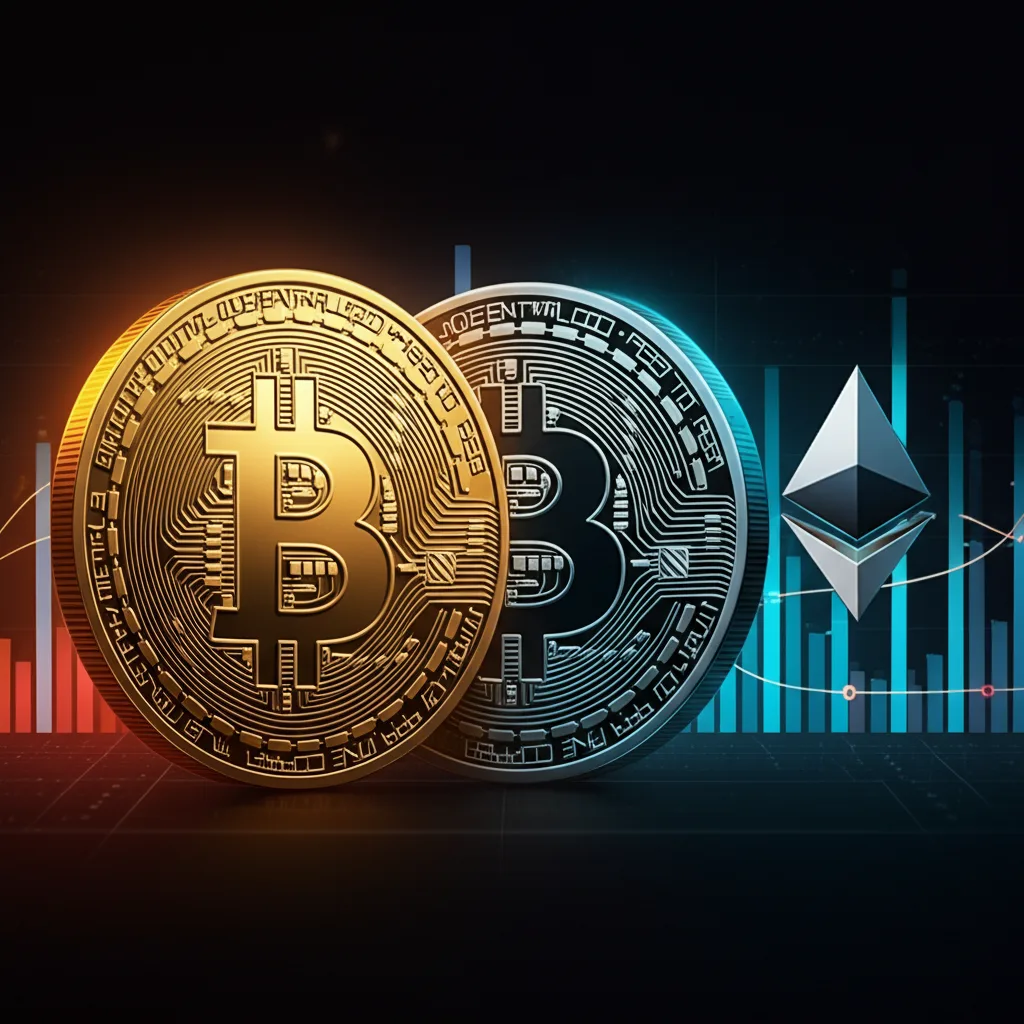
The financial world is undergoing a profound transformation, with traditional assets like gold contending with the emergence of digital counterparts such as Bitcoin. As investors and enthusiasts navigate this evolving landscape, understanding the fundamental differences and shared attributes of these assets becomes paramount. Furthermore, the broader digital asset ecosystem, particularly platforms like Ethereum, plays a critical role in facilitating growth and innovation. This article delves into the classic Bitcoin vs Gold: Unlocking Growth with Ethereum Gas Optimization debate, exploring their unique value propositions and highlighting how advancements in blockchain technology, specifically Ethereum gas optimization, are shaping the future of digital finance.
TL;DR
- Gold is a long-standing physical store of value, known for its stability and inflation hedge properties.
- Bitcoin is a decentralized digital asset, often dubbed "digital gold," offering scarcity, censorship resistance, and global transferability.
- Ethereum is a foundational blockchain for smart contracts, decentralized applications (dApps), and the broader Web3 ecosystem.
- High Ethereum gas fees have historically hindered network usability and adoption by increasing transaction costs.
- Ethereum Gas Optimization through Layer 2 scaling solutions (e.g., Rollups) and protocol upgrades (e.g., EIP-1559) is crucial for reducing costs, improving transaction speed, and enabling widespread growth in DeFi, NFTs, and other digital assets.
- Future developments, including sharding by 2025, aim to further enhance Ethereum’s scalability and efficiency, making the digital asset space more accessible and robust.
Bitcoin vs Gold: A Fundamental Comparison
For centuries, gold has been the quintessential safe-haven asset, a reliable store of value that transcends political and economic turmoil. Its scarcity, durability, and universally recognized value have made it a cornerstone of portfolios. However, the advent of Bitcoin in 2009 introduced a new paradigm, challenging gold’s dominance with a digital, decentralized alternative.
Gold: The Enduring Store of Value
Gold’s appeal stems from its tangible nature and deep-rooted history. It is a physical commodity, mined from the earth, and its supply is inherently limited, though not absolutely fixed. As an inflation hedge, gold has historically retained its purchasing power during periods of economic uncertainty, offering a counter-cyclical investment. Its acceptance across diverse cultures and economies makes it a truly global asset. However, gold comes with its own set of challenges: physical storage and security can be cumbersome and costly, it’s not easily divisible or transferable across borders instantly, and its value is often influenced by central bank policies and geopolitical events.
Bitcoin: The Digital Alternative
Bitcoin emerged as the first successful peer-to-peer electronic cash system, leveraging blockchain technology to create a decentralized, immutable ledger. Often referred to as "digital gold," Bitcoin shares gold’s scarcity, with a hard cap of 21 million coins, making it deflationary by design. Its key advantages include unparalleled portability, divisibility, and resistance to censorship. Transactions are processed on a global network, accessible to anyone with an internet connection, without the need for intermediaries.
However, Bitcoin also presents distinct characteristics. Its price volatility is significantly higher than gold’s, influenced by market sentiment, regulatory news, and adoption rates. While its underlying blockchain security is robust, the responsibility of self-custody for digital assets shifts to the individual, introducing new security considerations compared to traditional physical assets.
The Role of Ethereum in the Digital Asset Landscape
While Bitcoin pioneered the concept of decentralized digital money, Ethereum, launched in 2015, expanded the possibilities of blockchain technology beyond simple value transfers. Ethereum introduced smart contracts, self-executing agreements whose terms are directly written into code. This innovation paved the way for a vast ecosystem of decentralized applications (dApps), including decentralized finance (DeFi) protocols, non-fungible tokens (NFTs), and Web3 infrastructure.
Ethereum’s robust network acts as a global, open-source platform, allowing developers to build and deploy a wide array of tokens and digital assets. This functionality has fueled much of the innovation and growth seen in the crypto space, enabling complex financial instruments, digital collectibles, and new forms of digital ownership. The health and efficiency of the Ethereum network, therefore, have a direct impact on the broader digital asset economy, including indirectly affecting investor sentiment towards Bitcoin and other cryptocurrencies.
Unlocking Growth with Ethereum Gas Optimization
Despite its groundbreaking capabilities, Ethereum has faced significant challenges related to scalability and transaction costs. The rapid growth of DeFi and NFTs on the network has led to congestion, resulting in high "gas fees." Addressing these fees through effective Ethereum Gas Optimization is not merely a technical concern; it is fundamental to unlocking widespread adoption and sustained growth across the entire digital asset landscape.
What is Ethereum Gas?
In simple terms, "gas" is the fee required to perform an operation or execute a smart contract on the Ethereum blockchain. It’s denominated in Gwei (a small fraction of Ether) and represents the computational effort needed to process a transaction. Every action, from sending Ether to swapping tokens on a DeFi exchange or minting an NFT, consumes gas. When network demand is high, users bid higher gas prices to ensure their transactions are prioritized, leading to exorbitant costs that can make smaller transactions economically unfeasible. This directly impacts user experience and limits the accessibility of dApps, hindering the growth of the Web3 economy.
Strategies for Gas Optimization
Ethereum’s development community has been relentlessly pursuing solutions to reduce gas fees and improve network efficiency. These strategies are multifaceted:
- Layer 2 Scaling Solutions: These are protocols built on top of the Ethereum mainnet (Layer 1) that process transactions off-chain, then periodically batch and submit them back to the mainnet for finality.
- Rollups (Optimistic and ZK-Rollups): These are currently the most promising Layer 2 solutions. Optimistic Rollups assume transactions are valid by default and provide a challenge period, while ZK-Rollups use cryptographic proofs to instantly verify transactions. Both can drastically increase transaction throughput and reduce fees, making DeFi and trading more accessible.
- Sidechains: Independent blockchains compatible with Ethereum, offering their own consensus mechanisms and often lower fees, though with potentially different security assumptions.
- EIP-1559 (London Hard Fork): Implemented in August 2021, EIP-1559 introduced a new fee mechanism. Instead of a simple bid system, it uses a base fee that is algorithmically adjusted based on network congestion and then "burned" (removed from circulation). Users can also add a "priority fee" (tip) to incentivize miners. This has made gas fees more predictable and has a deflationary effect on Ether’s supply.
- Smart Contract Efficiency: Developers can optimize smart contract code to consume less gas, for instance, by reducing storage reads/writes, optimizing data structures, and choosing efficient operations. Regular audits help identify and fix inefficiencies.
- Future Developments (Ethereum 2.0 / Serenity): The long-term vision for Ethereum includes major upgrades to its core architecture. The "Merge" transitioned Ethereum from Proof-of-Work to Proof-of-Stake, significantly reducing energy consumption. Upcoming phases, particularly sharding expected by 2025, aim to break the blockchain into multiple parallel chains (shards), drastically increasing transaction processing capacity and further lowering gas costs.
Impact on DeFi and Web3 Adoption
Successful gas optimization is a game-changer for the entire digital asset space. Lower transaction costs make DeFi protocols more attractive, encouraging greater participation in lending, borrowing, and trading of tokens. It democratizes access to financial services previously limited by high fees. For Web3, optimized gas fees mean smoother user experiences for dApps, more affordable NFT minting and trading, and ultimately, broader adoption of decentralized internet technologies. This efficiency directly contributes to the utility and growth potential of the entire ecosystem, solidifying Ethereum’s role as a critical infrastructure layer.
Investment Considerations and Risk Notes
Investing in either Bitcoin, gold, or the broader crypto ecosystem requires careful consideration of various factors, including market dynamics, security, and individual risk tolerance.
Volatility and Market Dynamics
Gold typically exhibits lower volatility compared to digital assets. Its price movements are often slower and more predictable, making it a preferred choice for conservative investors seeking stability. Bitcoin, on the other hand, is known for its extreme price swings, which can present opportunities for significant gains but also substantial losses. The crypto market as a whole is still nascent and highly sensitive to regulatory news, technological developments, and macroeconomic shifts. Understanding these dynamics is crucial for any investor.
Security and Custody
For physical gold, security concerns revolve around storage, insurance, and the authenticity of the asset. For digital assets like Bitcoin and Ethereum-based tokens, security involves understanding the underlying blockchain technology, managing private keys, and mitigating risks associated with exchanges or smart contract vulnerabilities. Self-custody offers greater control but also places the burden of security entirely on the individual. Using reputable exchanges or hardware wallets are common practices, but each carries its own set of risks, including hacks or software bugs.
Risk Notes & Disclaimer
Investing in digital assets carries significant risks, including but not limited to market volatility, potential for fraud, regulatory changes, loss of principal, and technological vulnerabilities. The digital asset market is largely unregulated, and there is no guarantee of returns. While gold has its own risks (e.g., storage, theft, market manipulation), the risks associated with digital assets are often amplified by their relative novelty and complexity.
This article is for informational purposes only and does not constitute financial advice. It is essential to conduct your own thorough research, understand the inherent risks, and consult with a qualified financial advisor before making any investment decisions related to Bitcoin, gold, Ethereum, or any other asset. Past performance is not indicative of future results.
FAQ Section
Q1: Is Bitcoin truly "digital gold"?
A1: Bitcoin shares many characteristics with gold, such as scarcity, a limited supply, and serving as a hedge against inflation and economic uncertainty. Its decentralized nature and resistance to censorship also bolster its "digital gold" narrative. However, its higher volatility and shorter history mean it’s still evolving in its role as a stable store of value compared to centuries-old gold.
Q2: How do Ethereum gas fees affect the overall crypto market?
A2: High Ethereum gas fees can hinder the adoption and usability of decentralized applications (dApps), especially in DeFi and NFTs. This can deter new users, reduce trading volumes, and limit innovation. Conversely, effective gas optimization can lower transaction costs, making the ecosystem more accessible and fostering greater participation, which positively impacts the entire crypto market.
Q3: What are the primary benefits of Layer 2 solutions for Ethereum?
A3: Layer 2 solutions like Rollups significantly increase Ethereum’s transaction throughput and reduce gas fees by processing transactions off-chain before settling them on the mainnet. This leads to faster transaction finality, a more scalable network, and a better user experience for dApps, making the ecosystem more viable for widespread adoption.
Q4: Should I invest in Bitcoin or Gold for 2025?
A4: The decision to invest in Bitcoin or gold for 2025 depends entirely on an individual’s financial goals, risk tolerance, and market outlook. Gold offers stability and a proven track record as a store of value, while Bitcoin offers higher growth potential alongside higher volatility. Many investors consider a diversified portfolio that may include both, aligning with their personal investment strategy. This is not financial advice.
Q5: How does gas optimization relate to the security of transactions?
A5: Gas optimization, especially through Layer 2 solutions, primarily focuses on efficiency and cost reduction rather than directly altering the security model of individual transactions. However, by reducing network congestion and transaction costs, it can make the network more resilient against certain types of attacks (e.g., denial-of-service attempts that exploit high fees) and encourage more users to participate, indirectly contributing to the network’s overall robustness and decentralization. The security of Layer 2 solutions often relies on the underlying Layer 1 Ethereum security.
Q6: What is the biggest risk when investing in digital assets compared to gold?
A6: The biggest risk when investing in digital assets compared to gold is typically their higher volatility and the evolving regulatory landscape. Digital assets are relatively new and subject to rapid price swings, technological risks (e.g., smart contract bugs, network hacks), and potential changes in government regulations that could significantly impact their value and legality. Gold, while not without risk, offers greater historical stability and a more established regulatory framework.
Conclusion
The debate between Bitcoin and gold highlights the fascinating evolution of value storage in the 21st century. Gold, with its millennia of history, remains a tangible symbol of wealth and a traditional hedge. Bitcoin, as the digital pioneer, offers a compelling, decentralized alternative, representing the future of programmable scarcity and global accessibility. Crucially, the growth and maturation of the broader digital asset ecosystem, particularly on platforms like Ethereum, are pivotal. Effective Ethereum Gas Optimization is not just a technical improvement; it is an essential enabler for unlocking the full potential of DeFi, Web3, and the myriad of digital assets that build upon this innovative blockchain. As we look towards 2025 and beyond, continued advancements in scalability and efficiency will be key to making the digital financial landscape more inclusive, robust, and ready for mainstream adoption, further cementing its place alongside, or perhaps even surpassing, traditional assets in the global economy.





 Rifan Muazin
 Gus Nur
 Dokter Tifa