
 Rismon Sianipar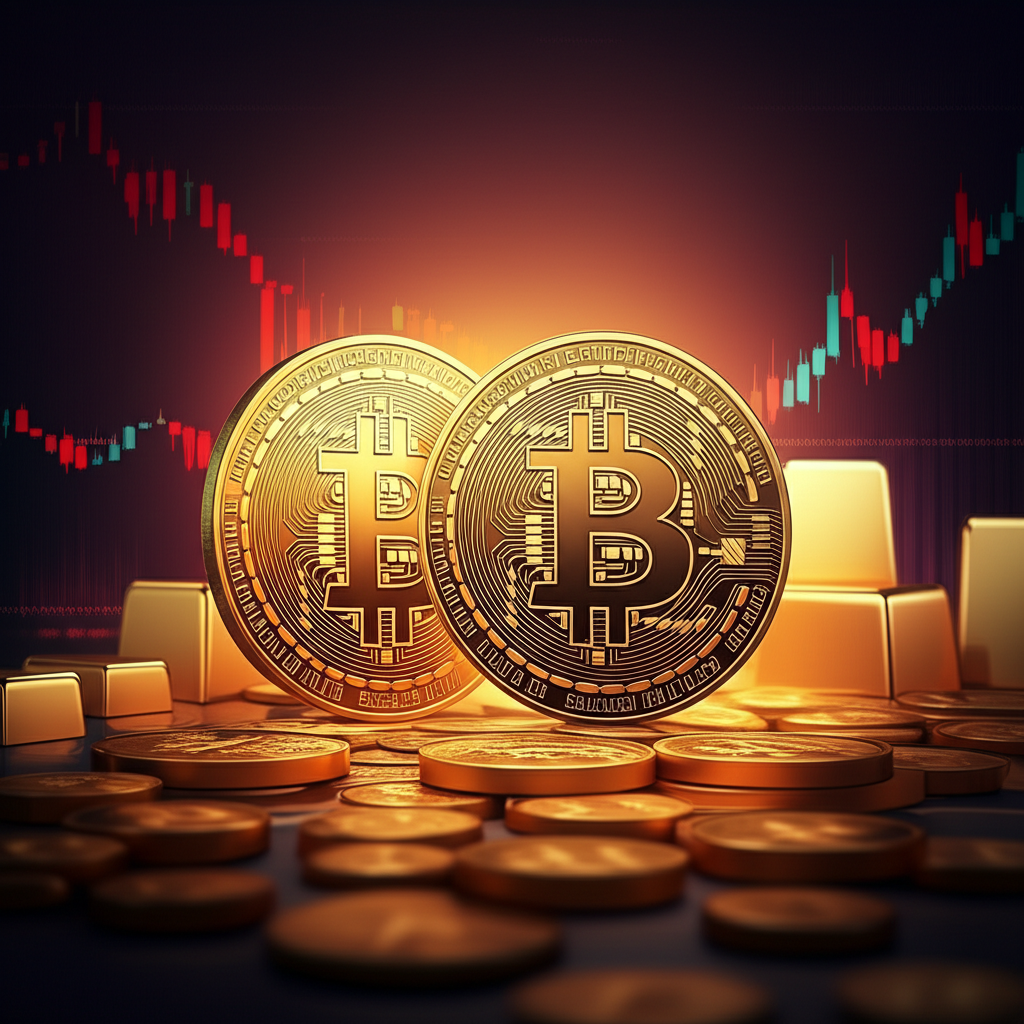
The debate between Bitcoin and gold as stores of value has raged for years, intensifying with each market cycle. As we look toward 2025, especially considering the potential for another bull market, the question of whether Bitcoin’s scarcity thesis holds up becomes paramount. This article explores the core arguments for Bitcoin’s digital scarcity, compares it to gold’s perceived scarcity, and analyzes the factors that will determine which asset proves more resilient in the coming years.
TL;DR:
- Bitcoin is often touted as "digital gold" due to its limited supply of 21 million coins.
- Gold’s scarcity is relative; new deposits can be discovered and mined.
- Bitcoin’s programmed scarcity is verifiable and transparent via the blockchain.
- During a bull market, demand for both Bitcoin and gold may increase, but their price performance could diverge.
- Factors like institutional adoption, regulatory clarity, and macroeconomic conditions will influence the outcome.
- Ultimately, the "winner" depends on individual risk tolerance, investment strategy, and belief in the long-term value proposition of each asset.
Understanding Bitcoin’s Scarcity Thesis
Bitcoin’s scarcity is a foundational principle of its value proposition. Unlike fiat currencies, which central banks can print at will, Bitcoin has a fixed supply of 21 million coins. This limit is hardcoded into its protocol, ensuring that no more than that amount will ever exist. This deliberate scarcity is designed to protect Bitcoin’s value against inflation and make it a store of value similar to gold.
The creation of new Bitcoin is governed by a process called mining, where computers solve complex mathematical problems to validate transactions and add new blocks to the blockchain. As a reward for their efforts, miners receive newly minted Bitcoin. However, the amount of Bitcoin awarded to miners is halved approximately every four years, a phenomenon known as the "halving." This further reduces the rate at which new Bitcoin enters circulation, reinforcing its scarcity. The next halving is expected in early 2024, potentially setting the stage for a bull market in 2025.
Bitcoin’s digital nature brings with it distinct security considerations. While the blockchain itself is highly secure, individual wallets and exchanges can be vulnerable to hacking and theft. Proper security measures, such as using hardware wallets and strong passwords, are crucial for protecting your Bitcoin holdings.
Gold’s Scarcity: A Relative Concept
Gold has been a store of value for thousands of years, prized for its beauty, durability, and relative scarcity. Unlike many other metals, gold is resistant to corrosion and easily divisible, making it suitable for use as currency and jewelry. However, gold’s scarcity is not absolute. New gold deposits can be discovered and mined, potentially increasing the overall supply and diluting its value.
While the rate of gold production has been relatively stable in recent years, advancements in mining technology and exploration could lead to new discoveries. Furthermore, the cost of mining gold can fluctuate depending on factors like energy prices and regulatory requirements. These factors can influence the supply and demand dynamics of the gold market, affecting its price.
Gold’s physical nature provides inherent security against digital threats. Unlike Bitcoin, gold cannot be hacked or stolen remotely. However, storing gold securely requires physical protection, such as vaults or safe deposit boxes. There are also associated costs for storage, insurance, and transportation.
Bitcoin vs Gold: Is Bitcoin Scarcity Thesis Worth It in 2025 During A Bull Market?
As we move into 2025, the potential for a Bitcoin bull market following the 2024 halving makes this comparison even more critical. Understanding the nuances of each asset’s scarcity will be essential for making informed investment decisions. Several factors will influence whether Bitcoin’s scarcity thesis proves more compelling than gold’s during this period.
- Institutional Adoption: Increased institutional interest in Bitcoin could drive up demand and validate its role as a store of value. Pension funds, hedge funds, and corporations allocating a portion of their portfolios to Bitcoin could significantly impact its price. Conversely, if institutions remain skeptical or hesitant to adopt Bitcoin, its price performance could lag behind gold.
- Regulatory Clarity: Clear and consistent regulations regarding Bitcoin and other crypto assets could boost investor confidence and encourage wider adoption. Regulatory uncertainty, on the other hand, could stifle growth and lead to price volatility. The SEC’s stance on crypto ETFs and other digital assets will be crucial.
- Macroeconomic Conditions: Factors like inflation, interest rates, and economic growth can influence the demand for both Bitcoin and gold. In times of economic uncertainty, investors often seek safe-haven assets like gold. However, if Bitcoin is increasingly viewed as a hedge against inflation, it could attract capital away from gold. The performance of other digital assets and DeFi tokens will also be a factor.
- Technological Advancements: Improvements in Bitcoin’s scalability, security, and usability could enhance its appeal to a broader audience. Innovations like the Lightning Network, which enables faster and cheaper Bitcoin transactions, could make it more practical for everyday use. Advancements in blockchain technology, more broadly, could also influence investor perception of Bitcoin.
Here’s a table summarizing the key differences between Bitcoin and Gold:
| Feature | Bitcoin | Gold |
|---|---|---|
| Scarcity | Fixed supply of 21 million coins | Relative scarcity; new deposits possible |
| Security | Blockchain; vulnerable to hacking | Physical; requires secure storage |
| Portability | Easily transferable digitally | Requires physical transportation |
| Divisibility | Divisible into satoshis (0.00000001 BTC) | Divisible, but less practical for small transactions |
| Verifiability | Transparent blockchain transactions | Requires assaying for purity |
| Use Cases | Store of value, digital currency | Store of value, jewelry, industrial use |
| Market Maturity | Relatively new asset class | Established asset class |
| Regulatory Status | Evolving and uncertain | Well-defined regulations |
Risks to Consider
Investing in both Bitcoin and gold carries risks. Bitcoin is a volatile asset, and its price can fluctuate dramatically. Regulatory changes, technological disruptions, and market sentiment can all impact its value. Gold, while generally considered less volatile, is still subject to market fluctuations and can be affected by factors like interest rates, inflation, and geopolitical events.
It’s important to understand your risk tolerance and invest only what you can afford to lose. Diversifying your portfolio across different asset classes can help mitigate risk. Consider consulting with a financial advisor to develop an investment strategy that aligns with your individual goals and circumstances. Also, be aware of scams and fraudulent schemes involving crypto. Always do your own research and exercise caution when investing in digital assets. Always remember that crypto, tokens, and the Web3 space in general is still very new and full of potential risks.
FAQ: Bitcoin vs Gold
- Q: Is Bitcoin really "digital gold"?
- A: The comparison is based on Bitcoin’s limited supply and potential as a store of value. However, Bitcoin is also a digital currency with unique technological properties.
- Q: What are the tax implications of owning Bitcoin or gold?
- A: Both Bitcoin and gold are subject to capital gains taxes when sold for a profit. Tax laws vary by jurisdiction, so it’s important to consult with a tax professional.
- Q: How can I buy Bitcoin or gold?
- A: Bitcoin can be purchased on cryptocurrency exchanges. Gold can be purchased from precious metals dealers, bullion brokers, or through ETFs.
- Q: Which is a better investment: Bitcoin or gold?
- A: The answer depends on your individual risk tolerance, investment goals, and belief in the long-term value proposition of each asset. There is no one-size-fits-all answer.
- Q: What role do trading and DeFi play in this equation?
- A: Active trading of Bitcoin can generate returns, but also increases risk. DeFi platforms offer opportunities to earn yield on Bitcoin holdings, but these also come with their own set of risks, including smart contract vulnerabilities.
Disclaimer: This article is for informational purposes only and does not constitute financial advice. Investing in Bitcoin and gold involves risks, and you could lose money. Always do your own research and consult with a financial advisor before making any investment decisions.
Conclusion: The Future of Bitcoin and Gold in 2025
As we look ahead to 2025, the debate surrounding Bitcoin vs Gold: Is Bitcoin Scarcity Thesis Worth It in 2025? During A Bull Market is likely to continue. While gold remains a trusted store of value with a long history, Bitcoin’s digital scarcity and potential for innovation make it an intriguing alternative. Ultimately, the choice between Bitcoin and gold depends on individual circumstances and investment preferences. Whether you believe in the future of crypto and blockchain or prefer the stability of traditional assets, understanding the fundamentals of each is crucial for making informed decisions in the ever-evolving financial landscape.






 Roy Suryo

 Dokter Tifa

 Egi Sujana