
 Gus Nur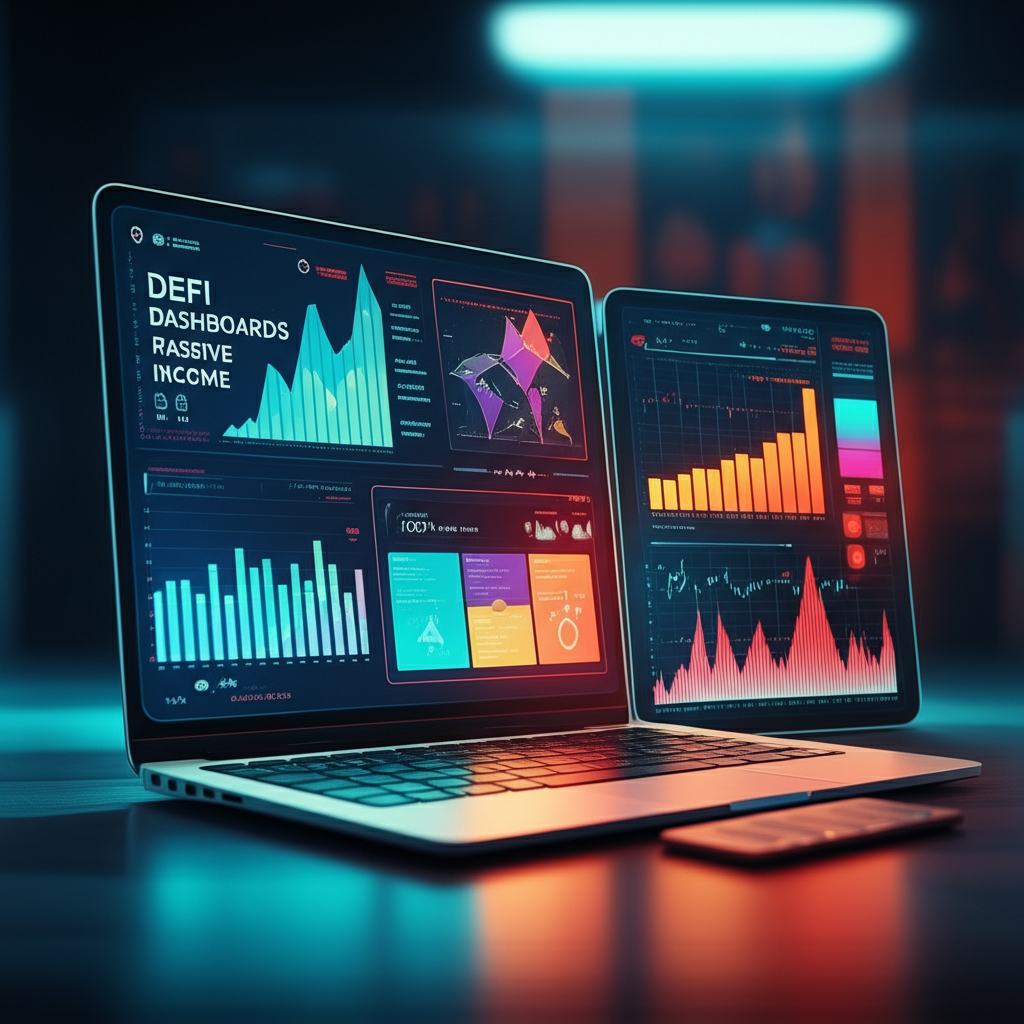
The world of decentralized finance (DeFi) offers a myriad of opportunities for earning passive income, but navigating its complexities can be daunting. Enter DeFi dashboards – powerful tools designed to simplify and optimize your journey. This article delves into how DeFi dashboards for passive income can revolutionize the way you manage and grow your digital assets, offering clarity, efficiency, and enhanced control.
TL;DR
- DeFi dashboards aggregate your decentralized finance activities into one user-friendly interface.
- They simplify complex strategies like yield farming, staking, and lending for passive income.
- Key features include multi-chain support, real-time analytics, portfolio tracking, and risk assessment tools.
- Dashboards enhance efficiency by automating calculations and providing actionable insights.
- Choosing the right dashboard involves considering security, UI/UX, supported protocols, and community reputation.
- While powerful, DeFi carries inherent risks, including smart contract vulnerabilities and impermanent loss.
Understanding DeFi and the Passive Income Landscape
Decentralized finance (DeFi) represents a paradigm shift in financial services, leveraging blockchain technology to create open, permissionless, and transparent systems. Unlike traditional finance, DeFi operates without intermediaries, allowing users to interact directly with protocols for lending, borrowing, trading, and earning. The allure of DeFi largely stems from its potential for passive income – generating returns on your crypto holdings without active trading.
Common passive income strategies in DeFi include:
- Yield Farming: Providing liquidity to decentralized exchanges (DEXs) and earning fees, often supplemented by governance tokens.
- Staking: Locking up tokens to support the security and operations of a blockchain network, earning rewards in return.
- Lending: Supplying digital assets to a lending protocol, allowing others to borrow them and earning interest.
- Liquidity Providing: Contributing tokens to a liquidity pool on a DEX, earning a share of trading fees.
While these opportunities are lucrative, managing them across various protocols, chains, and wallets can quickly become overwhelming. This is where DeFi dashboards become indispensable.
How DeFi Dashboards Streamline Passive Income Strategies
A DeFi dashboard acts as your personal command center for the decentralized financial ecosystem. Instead of manually tracking your assets, positions, and earnings across multiple dApps and blockchain explorers, a dashboard consolidates all this information into a single, intuitive interface. For anyone serious about leveraging DeFi dashboards for passive income, this aggregation is a game-changer.
Yield Farming Simplified
Yield farming involves moving assets between different protocols to maximize returns, often chasing the highest Annual Percentage Yields (APYs). Without a dashboard, this requires constant monitoring of various platforms, manual calculations, and frequent transactions. DeFi dashboards centralize this data, displaying current APYs, your invested capital, and accumulated rewards across different farms. Some even offer tools to simulate potential returns or identify the most profitable farming opportunities, drastically reducing the research burden.
Staking and Lending Opportunities
Staking and lending are foundational passive income strategies. Dashboards provide a clear overview of your staked tokens, vesting schedules, and accumulated rewards from various proof-of-stake networks or lending protocols. They can alert you to new lending opportunities with competitive interest rates or provide insights into the health and security of different staking pools. This centralized view allows for easier comparison and management of your digital assets.
Automated Portfolio Tracking
Beyond just tracking passive income streams, DeFi dashboards offer comprehensive portfolio management. They automatically track the value of your tokens, NFTs, and liquidity provider (LP) tokens across different blockchains (e.g., Ethereum, Polygon, Binance Smart Chain). This real-time visibility into your total portfolio value, asset allocation, and performance metrics is crucial for making informed decisions and rebalancing strategies. Many dashboards also display historical performance, helping you analyze past gains and losses.
Key Features to Look For in a DeFi Dashboard for Passive Income
Choosing the right dashboard is crucial for optimizing your DeFi passive income journey. Here are essential features to prioritize:
Multi-Chain Compatibility
The DeFi landscape is increasingly multi-chain, with protocols existing on various blockchain networks. A top-tier dashboard should support multiple chains (e.g., Ethereum, Polygon, Solana, Avalanche, Arbitrum, Optimism) to provide a holistic view of your entire Web3 portfolio. This prevents the need to use separate tools for each chain, saving time and reducing complexity.
Real-Time Analytics and Performance Tracking
Effective passive income generation requires accurate data. Look for dashboards that offer:
- Real-time APY/APR tracking: Monitor interest rates and farming yields across various protocols.
- Profit & Loss (P&L) statements: Understand your actual earnings from different positions.
- Impermanent loss calculators: Crucial for liquidity providers to assess potential losses.
- Gas fee estimations: Help in timing transactions efficiently to minimize costs.
- Historical data: Analyze past performance to refine future strategies.
Security and Audits
While dashboards themselves typically don’t hold your funds (they are read-only interfaces that connect to your wallet), their security is paramount. Ensure the dashboard you choose has:
- Strong privacy policies: How do they handle your data?
- Regular security audits: Independent verification of their code and infrastructure.
- Non-custodial design: Your funds remain in your own wallet, not on the dashboard.
- Reputable track record: Look for established platforms with positive community feedback.
User Experience and Interface (UI/UX)
A well-designed dashboard is intuitive, easy to navigate, and visually clear. A cluttered or confusing interface can hinder decision-making. Look for:
- Clean layout: Easy to find the information you need.
- Customizable views: Personalize your dashboard to highlight key metrics.
- Mobile compatibility: Access your portfolio on the go.
- Helpful tutorials and support: Especially valuable for beginners.
Popular DeFi Dashboards for Passive Income in 2025
The DeFi dashboard space is dynamic, with new contenders emerging and existing platforms evolving. As of 2025, several dashboards stand out for their robust features and user-centric design:
- Zapper.fi: Known for its user-friendly interface and ability to track a wide array of DeFi assets and protocols across multiple chains. It excels at showing your net worth and breaking down your positions.
- DeBank: A powerful portfolio tracker that provides deep insights into your DeFi positions, including lending, staking, and LP tokens. It’s particularly strong for detailed analytics and discovering new protocols.
- Zerion: Offers a sleek design with comprehensive portfolio tracking, including NFTs. It focuses on a clean user experience and integration with various wallets and protocols.
- Ape Board (now part of CoinGecko Portfolio): While the original Ape Board has evolved, its successor platforms continue to offer multi-chain tracking and a holistic view of your digital assets, including performance metrics.
- Tin.network: Focuses on yield farming and liquidity pool tracking, offering detailed insights into your positions and potential returns, often with advanced filtering capabilities.
These platforms are constantly updating their features, so always check their latest offerings and community reviews.
Getting Started: Using a DeFi Dashboard
- Choose a Dashboard: Select one based on the features, supported chains, and user experience that best fit your needs.
- Connect Your Wallet: Dashboards are non-custodial. You connect your Web3 wallet (e.g., MetaMask, Ledger, Trust Wallet) by signing a read-only transaction. Your private keys are never exposed.
- Explore Your Portfolio: The dashboard will automatically fetch your asset data across all supported chains and protocols.
- Monitor & Optimize: Use the analytics tools to track your passive income streams, identify opportunities, and manage risks.
Risks Associated with DeFi and Dashboards
While DeFi dashboards for passive income offer immense benefits, it’s crucial to acknowledge the inherent risks within the decentralized finance ecosystem:
- Smart Contract Risk: The underlying code of DeFi protocols can contain bugs or vulnerabilities, potentially leading to loss of funds. Even audited contracts are not 100% risk-free.
- Impermanent Loss: A risk specific to liquidity provision, where the value of your deposited assets can decrease relative to holding them outside the liquidity pool due to price fluctuations.
- Rug Pulls & Scams: Malicious actors can create fraudulent protocols, attracting investors before disappearing with their funds.
- Regulatory Risk: The regulatory landscape for crypto and DeFi is still evolving and could impact certain protocols or activities.
- Market Volatility: The value of crypto assets can be highly volatile, impacting the principal of your passive income investments.
- Gas Fees: High network transaction fees (especially on Ethereum) can eat into profits, particularly for smaller investments or frequent rebalancing.
Disclaimer: The information provided in this article is for educational and informational purposes only and does not constitute financial advice. Investing in cryptocurrency and DeFi carries significant risks, including the potential loss of principal. You should conduct your own research and consult with a qualified financial professional before making any investment decisions.
FAQ Section
Q1: Are DeFi dashboards safe to use?
A1: Yes, generally. Reputable DeFi dashboards are non-custodial, meaning they don’t hold your funds. You connect your wallet, giving them read-only access to display your portfolio. Your private keys remain secure in your own wallet. However, always ensure the dashboard itself is reputable and has a strong security track record.
Q2: Do I need technical skills to use a DeFi dashboard?
A2: No. While a basic understanding of Web3 wallets and blockchain concepts is helpful, DeFi dashboards are designed to be user-friendly. Their primary purpose is to simplify complex information, making them accessible even for beginners.
Q3: What kind of passive income can I earn using these dashboards?
A3: Dashboards help you track and manage passive income from various DeFi strategies, including yield farming (earning trading fees and governance tokens), staking (earning network rewards), and lending (earning interest on deposited assets).
Q4: How do DeFi dashboards make money if they are free to use?
A4: Many dashboards offer a free tier with basic features and generate revenue through premium subscriptions (for advanced analytics or exclusive features), integrations with specific protocols (referral fees), or by issuing their own tokens.
Q5: Can I use DeFi dashboards on my mobile device?
A5: Yes, most modern DeFi dashboards are designed with responsive web interfaces that work well on mobile browsers. Some also offer dedicated mobile applications for enhanced convenience.
Q6: What’s the main difference between a DeFi dashboard and a centralized exchange?
A6: A centralized exchange (CEX) is an intermediary that holds your funds and facilitates trades. A DeFi dashboard, on the other hand, is a non-custodial tool that connects to your own decentralized wallet and displays your assets and activities across various independent DeFi protocols, without ever taking custody of your funds.
Conclusion
The journey into decentralized finance, particularly for generating passive income, can be incredibly rewarding but also intricate. DeFi dashboards for passive income serve as essential navigators, transforming a fragmented landscape into a cohesive, manageable experience. By aggregating data, simplifying complex strategies, and providing real-time insights, these tools empower both beginners and intermediate users to confidently participate in the Web3 economy. As the DeFi space continues to mature, leveraging a robust dashboard will be increasingly vital for optimizing your returns and maintaining control over your digital assets.







 Roy Suryo

 Rismon Sianipar
 Dokter Tifa

 Egi Sujana