
 Gus Nur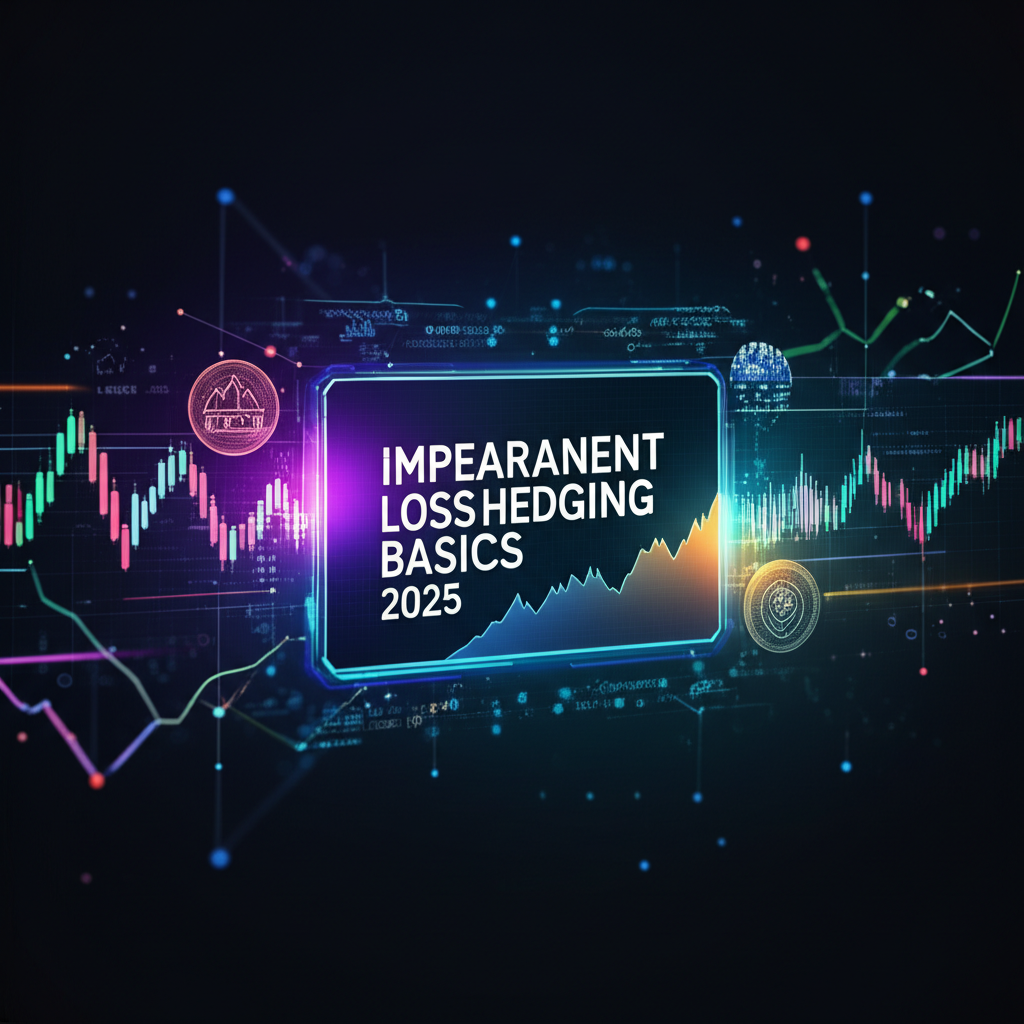
The decentralized finance (DeFi) landscape, a cornerstone of the broader crypto and Web3 ecosystem, has revolutionized how digital assets are traded, borrowed, and lent. At its heart are Automated Market Makers (AMMs) that power liquidity pools, enabling seamless, permissionless trading. However, for liquidity providers (LPs) contributing their tokens to these pools, a significant and often misunderstood risk emerges: Impermanent Loss (IL). As we navigate 2025, understanding and mitigating this risk is paramount for anyone serious about optimizing their DeFi strategies. This comprehensive guide delves into the Impermanent Loss Hedging Basics 2025, offering clear explanations, practical strategies, and crucial insights for both beginners and intermediate participants in the digital asset space.
TL;DR
- Impermanent Loss (IL) is the temporary difference in value between holding assets in an AMM liquidity pool versus simply holding them in your wallet (HODLing), caused by price divergence.
- It becomes a "permanent" loss if you withdraw your liquidity while the price divergence persists.
- Key hedging strategies include: using stablecoin or low-volatility pools, single-sided liquidity options, employing derivatives (options/futures), active management of concentrated liquidity, exploring IL insurance protocols, and leveraging protocol-level IL minimization features.
- The goal isn’t always to eliminate IL entirely, but to manage it effectively alongside fee generation to ensure overall profitability.
- Risks include smart contract vulnerabilities, market volatility, and the complexity/cost of hedging tools.
Understanding Impermanent Loss (IL): The Core Challenge
Impermanent Loss occurs when the price ratio of tokens in a liquidity pool changes from the time you deposited them. An AMM protocol works to maintain a constant product (x * y = k), meaning as one asset’s price increases relative to the other, arbitrageurs will remove the cheaper asset and add the more expensive one until the ratio rebalances. This rebalancing act ensures the pool always reflects market prices, but it means LPs end up with more of the underperforming asset and less of the outperforming one than if they had simply held their initial deposit.
The term "impermanent" is crucial: the loss is only realized if you withdraw your liquidity while the price divergence exists. If the asset prices return to their original deposit ratio, the impermanent loss disappears. However, in volatile crypto markets, such returns are not guaranteed, making IL a real and often significant risk for liquidity providers. It effectively means you’d have been better off just holding your initial assets, minus any trading fees earned.
Consider an example: You deposit 1 ETH and 1,000 USDC into a pool (ETH=$1,000). Your total value is $2,000. If ETH’s price rises to $1,500, arbitrageurs will buy ETH from the pool using USDC until the pool rebalances. You might end up with, say, 0.816 ETH and 1,224 USDC. The total value is now $2,448. If you had HODLed, you’d have 1 ETH ($1,500) and 1,000 USDC ($1,000), totaling $2,500. The $52 difference ($2,500 – $2,448) is your impermanent loss, before considering any fees earned.
The Landscape of DeFi in 2025 and IL
As we look towards 2025, the DeFi space continues to mature. We anticipate further institutional adoption of digital assets, more robust regulatory frameworks, and continued innovation in blockchain technology. Despite these advancements, the fundamental mechanics of AMMs and the inherent volatility of crypto tokens mean that Impermanent Loss remains a critical consideration for anyone engaging in liquidity provision. New protocols and sophisticated trading tools are emerging to address this, making the study of Impermanent Loss Hedging Basics 2025 more relevant than ever. Ensuring the security and profitability of capital in Web3 requires a deep understanding of these underlying risks.
Impermanent Loss Hedging Basics 2025: Strategies for Protection
Effective impermanent loss hedging isn’t about eliminating risk entirely, but about managing it to improve the overall risk-adjusted returns of your liquidity provision. Here are several strategies gaining traction or evolving by 2025:
Stablecoin Pools and Low Volatility Pairs
One of the simplest and most effective ways to minimize IL is to choose liquidity pools composed of assets with very low correlation or price divergence.
- Stablecoin-to-Stablecoin Pools: Pools like USDC/USDT or DAI/USDT experience minimal price fluctuations between the assets. While not entirely immune (due to slight de-pegging risks or yield differences), IL is significantly reduced. These pools are ideal for capital preservation and earning yield primarily from trading fees.
- Wrapped Asset Pairs: Pairs like wBTC/renBTC (or similar wrapped versions of the same asset across different chains) also exhibit high correlation, keeping IL low.
- Pros: Low IL risk, relatively simple to manage.
- Cons: Lower potential trading fees compared to volatile pairs, exposure to stablecoin de-pegging risk or smart contract risk of wrapped assets.
Single-Sided Liquidity Provision and Dynamic Rebalancing
Some innovative protocols are designed to offer LPs exposure to IL mitigation strategies.
- Single-Sided Liquidity: Protocols like Bancor (with its V3 iteration) allow users to deposit only one asset into a pool and provide impermanent loss protection. While the mechanics are complex (often involving tokenomics and protocol insurance funds), they aim to guarantee LPs are compensated for IL.
- Dynamic Rebalancing AMMs: Newer AMM designs (e.g., Maverick Protocol) allow for highly customizable liquidity provision that can dynamically rebalance or offer various concentrated liquidity strategies to optimize for specific market conditions and potentially reduce IL exposure in certain ranges.
- Pros: Direct IL protection offered by the protocol, potentially simpler for the end-user.
- Cons: Reliance on protocol tokenomics and sustainability, smart contract risk, often lower capital efficiency than traditional AMMs for the same risk.
Options and Futures for Directional Hedging
For more sophisticated users, traditional financial derivatives are adapted for crypto trading to hedge IL.
- Shorting the Volatile Asset: If you provide liquidity to an ETH/USDC pool and anticipate ETH’s price will rise (causing IL), you could simultaneously short a proportional amount of ETH using perpetual futures or options. If ETH rises, the loss from your LP position is offset by gains from your short position.
- Buying Put Options: Purchasing put options on the more volatile asset in your pair can protect against downside IL. If the asset’s price drops significantly, the put option gains value, offsetting the IL from your LP position.
- Pros: Precise hedging against specific price movements.
- Cons: High complexity, significant capital requirements, cost of premiums/funding rates, liquidation risks with futures, requires active management and understanding of derivatives markets.
Concentrated Liquidity Management and Active Strategies
Platforms like Uniswap V3 introduced concentrated liquidity, allowing LPs to deploy capital within specific price ranges. While this increases capital efficiency and potential fee earnings, it also amplifies IL if the price moves out of the specified range.
- Active Range Management: LPs must actively monitor the price of their assets and adjust their liquidity ranges to stay "in the money." This can involve moving ranges, or even withdrawing and redeploying liquidity.
- Automated Liquidity Managers: By 2025, more sophisticated third-party tools and protocols (e.g., Arrakis Finance, Gamma Strategies) offer automated concentrated liquidity management, attempting to optimize ranges and minimize IL through algorithms.
- Pros: Significantly higher capital efficiency and fee generation potential.
- Cons: Requires constant attention and active management, amplified IL if price leaves range, reliance on automated strategies (smart contract risk).
Insurance Protocols and IL Protection
A nascent but growing sector within DeFi is dedicated to providing insurance against various risks, including Impermanent Loss.
- Dedicated IL Insurance: Protocols are emerging that offer specific insurance policies to cover IL for LPs. Users pay a premium to protect their deposits in certain pools.
- Coverage Mechanisms: These protocols often pool premiums to pay out claims, sometimes utilizing their own tokenomics for staking and risk assessment.
- Pros: Direct financial protection against IL, potential for peace of mind.
- Cons: Still an evolving space, high premiums, limited coverage for all pools, reliance on the solvency and smart contract security of the insurance protocol. Due diligence is critical for Web3 security.
Impermanent Loss Minimization through Protocol Design
Some next-generation AMMs are engineered with IL minimization as a core feature.
- Dynamic Fees: Adjusting trading fees based on volatility or other market conditions can help compensate LPs more effectively during periods of high IL.
- Bonding Curves/Specialized Algorithms: Protocols experimenting with different mathematical curves or algorithms for their AMMs might naturally reduce IL by altering how price discovery and rebalancing occur.
- Pros: IL mitigation built into the system, potentially seamless for LPs.
- Cons: May be less capital-efficient in other aspects, still subject to smart contract risk, specific to particular blockchain platforms or token designs.
Risk Notes and Disclaimer
Investing in cryptocurrency and decentralized finance carries significant risks. Prices are highly volatile and can fluctuate dramatically. While Impermanent Loss hedging strategies aim to mitigate specific risks, they introduce their own complexities and potential costs. Risks include:
- Market Volatility: Unpredictable price swings can quickly erode gains or amplify losses.
- Smart Contract Risks: Vulnerabilities or bugs in the underlying code of DeFi protocols, hedging tools, or insurance platforms can lead to irreversible loss of funds.
- Liquidation Risks: Using leverage with derivatives for hedging can lead to liquidation if market conditions move against your position.
- Platform Risks: The reliability and solvency of third-party platforms offering hedging tools or IL protection.
- Regulatory Uncertainty: The crypto landscape is subject to evolving regulations that could impact asset values and protocol functionality.
Disclaimer: This article is for informational purposes only and does not constitute financial advice. Always conduct your own thorough research (DYOR) and consult with a qualified financial professional before making any investment decisions. Never invest more than you can afford to lose.
FAQ Section
Q1: Is Impermanent Loss always a ‘loss’ compared to just holding my assets?
A1: Yes, in its purest definition, Impermanent Loss refers to the opportunity cost of holding assets in an AMM pool versus simply HODLing them. However, the fees you earn as an LP can often (but not always) offset this "loss," making your overall position profitable. The goal of Impermanent Loss hedging is to ensure the fees earned outweigh the IL.
Q2: Can Impermanent Loss be completely avoided in DeFi?
A2: No, complete avoidance is extremely difficult, if not impossible, for most standard AMM pools with volatile assets. It’s an inherent mathematical property of constant product AMMs when asset prices diverge. The focus is on minimizing, offsetting, or getting compensated for it through smart strategies and protocol features.
Q3: What’s the biggest challenge for Impermanent Loss hedging in 2025?
A3: The biggest challenge remains the complexity and cost associated with advanced hedging strategies, coupled with the rapid evolution of the DeFi landscape. Keeping up with new protocols, understanding their intricate mechanisms, and managing multiple positions across different platforms requires significant time, expertise, and capital. The security aspect of Web3 also adds a layer of concern.
Q4: How does concentrated liquidity (e.g., Uniswap V3) affect Impermanent Loss?
A4: Concentrated liquidity amplifies both potential fee earnings and Impermanent Loss. If the price of the assets stays within your specified range, you earn significantly more fees on your capital. However, if the price moves out of your range, your position effectively becomes single-sided (holding only the less valuable asset), and the IL can be much greater than in a full-range pool, making active management crucial.
Q5: Are Impermanent Loss insurance products reliable?
A5: Impermanent Loss insurance is a nascent and rapidly evolving area. Their reliability depends entirely on the specific protocol, its tokenomics, the size and solvency of its insurance fund, and the accuracy of its risk assessment models. While promising, they are not yet universally battle-tested or fully standardized. Thorough due diligence is essential before relying on them.
Conclusion
Impermanent Loss remains a fundamental consideration for anyone providing liquidity in the decentralized finance space. As the crypto and blockchain sectors mature into 2025, understanding the Impermanent Loss Hedging Basics 2025 will be crucial for protecting capital and maximizing returns. From choosing stable asset pairs to deploying sophisticated derivatives or leveraging protocol-level innovations, a range of strategies exists to mitigate this pervasive risk. Successful liquidity provision in the digital asset economy requires not just an understanding of the potential rewards but also a proactive approach to managing inherent risks. Continuous learning, adaptability, and a robust risk management framework are the keys to thriving in the dynamic world of DeFi.





 Roy Suryo

 Rismon Sianipar
 Dokter Tifa

 Egi Sujana