
 Egi Sujana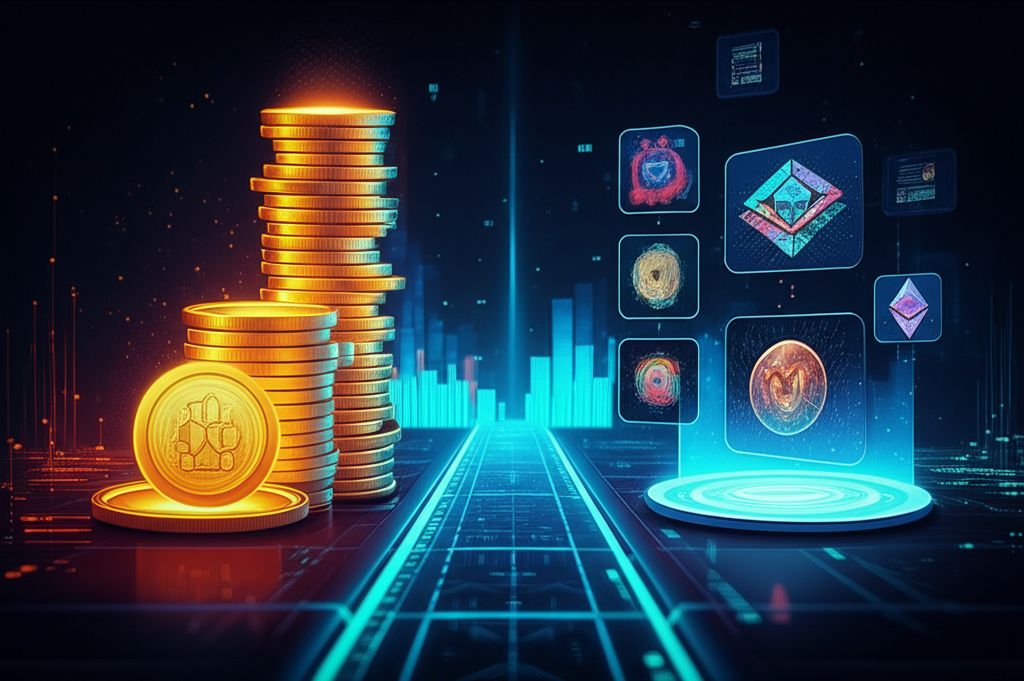
The world of crypto and blockchain can appear daunting to newcomers, yet it offers a fascinating landscape of innovation, particularly concerning digital assets and their underlying standards. For anyone looking to understand the fundamental building blocks of this ecosystem, distinguishing between ERC-20 and ERC-721 tokens is crucial. This article serves as your guide to becoming a Beginner to Pro with ERC-20 vs ERC-721 , demystifying these two pivotal Ethereum token standards and exploring their distinct roles, applications, and future relevance in the evolving Web3 space. We’ll delve into their core differences, provide real-world examples, and discuss their impact on DeFi, trading, and the broader digital economy, offering insights relevant for today and looking ahead to 2025.
TL;DR: ERC-20 vs. ERC-721
- ERC-20 Tokens: Fungible, meaning each token is identical and interchangeable (like fiat currency). Primarily used for cryptocurrencies, utility tokens, governance tokens, and stablecoins. Divisible.
- ERC-721 Tokens: Non-fungible, meaning each token is unique and distinct (like a piece of art or a deed). Primarily used for Non-Fungible Tokens (NFTs) representing digital ownership of art, collectibles, real estate, and unique in-game items. Not divisible.
- Both are standards on the Ethereum blockchain, defining how tokens are created, managed, and interact with smart contracts.
- Understanding these standards is key to navigating the Web3 and digital assets landscape, including trading and DeFi.
Understanding ERC-20 Tokens: The Standard for Fungible Assets
ERC-20, or Ethereum Request for Comment 20, is a technical standard used for all smart contracts on the Ethereum blockchain that implement fungible tokens. "Fungible" means that each unit of the token is identical and interchangeable with any other unit of the same token. Think of it like a dollar bill: one dollar bill is worth the same as any other dollar bill, and you can easily swap them without losing value or uniqueness.
Key Characteristics of ERC-20 Tokens:
- Fungibility: As explained, every ERC-20 token of a specific type has the same value and properties as another token of the same type.
- Divisibility: ERC-20 tokens can often be divided into smaller units, similar to how one Bitcoin can be divided into Satoshis.
- Standard Functions: The ERC-20 standard defines a common set of functions that all compliant tokens must implement, such as
transfer(to send tokens),balanceOf(to check a balance),approve(to allow another address to spend tokens on your behalf), andtotalSupply(to see the total number of tokens). This standardization allows for seamless integration across various decentralized applications (dApps), exchanges, and wallets.
Common Use Cases for ERC-20 Tokens:
ERC-20 tokens power a vast array of applications within the crypto ecosystem:
- Cryptocurrencies and Utility Tokens: Many popular cryptocurrencies are ERC-20 tokens, serving various purposes from facilitating transactions to granting access to specific network services.
- Stablecoins: Tokens pegged to the value of a fiat currency (e.g., USDT, USDC) or other assets, providing stability in volatile markets.
- Governance Tokens: Used in Decentralized Autonomous Organizations (DAOs) to give holders voting rights and influence over the project’s future development.
- DeFi (Decentralized Finance): ERC-20 tokens are the backbone of most DeFi protocols, used for lending, borrowing, liquidity provision, and yield farming.
- Trading: They are widely traded on centralized and decentralized exchanges, representing the majority of the token volume in the crypto market.
Examples: Tether (USDT), Uniswap (UNI), Chainlink (LINK), MakerDAO (MKR) are all prominent ERC-20 tokens. These tokens are essential for the smooth functioning of the Ethereum network’s economy and Web3 applications.
Unveiling ERC-721 Tokens: The Backbone of Non-Fungible Assets
In contrast to ERC-20, ERC-721 is a standard for non-fungible tokens (NFTs). "Non-fungible" means that each token is unique and distinct, possessing individual characteristics and a unique identifier that sets it apart from every other token, even within the same contract. Think of it like a unique piece of art, a rare collectible, or a deed to a house: each item has its own specific value and cannot be simply swapped for another identical item.
Key Characteristics of ERC-721 Tokens:
- Non-Fungibility: Each ERC-721 token is unique and irreplaceable. It has a distinct token ID and metadata that defines its specific properties.
- Uniqueness: No two ERC-721 tokens are exactly alike, even if they come from the same collection.
- Indivisibility: ERC-721 tokens are typically indivisible; you own the whole token or none of it.
- Proof of Ownership: Because each token is unique and recorded on the blockchain, ERC-721 tokens provide verifiable proof of ownership for digital assets.
Common Use Cases for ERC-721 Tokens:
ERC-721 tokens have revolutionized the concept of digital ownership, particularly in the realm of:
- Digital Art and Collectibles: The most well-known application, enabling artists to tokenize their creations and collectors to own verifiable digital scarcity (e.g., CryptoPunks, Bored Ape Yacht Club).
- Gaming: Representing unique in-game items, characters, and virtual land, giving players true ownership of their digital assets.
- Real Estate and Deeds: Potentially tokenizing physical assets like real estate, allowing for fractional ownership and easier transfer.
- Identity and Certificates: Digital identities, academic degrees, or certifications could be represented as unique NFTs, providing verifiable credentials.
- Ticketing: Unique event tickets that prevent counterfeiting and facilitate secondary market sales.
Examples: CryptoKitties (one of the first mainstream NFTs), Bored Ape Yacht Club, NBA Top Shot, and countless digital art pieces are all examples of ERC-721 tokens. These tokens are fundamental to the burgeoning Web3 economy, offering new paradigms for ownership and value.
Beginner to Pro with Erc-20 Vs Erc-721 : A Core Comparison
To truly grasp the power and versatility of Ethereum’s token standards, a direct comparison is essential. Understanding these differences is a fundamental step in going from Beginner to Pro with Erc-20 Vs Erc-721 , as their distinct properties dictate their applications and market behavior.
| Feature | ERC-20 (Fungible Tokens) | ERC-721 (Non-Fungible Tokens) |
|---|---|---|
| Fungibility | Each token is identical and interchangeable. | Each token is unique and non-interchangeable. |
| Uniqueness | All tokens are the same. | Each token has a unique ID and properties (metadata). |
| Divisibility | Yes, can be divided into smaller units. | No, typically indivisible. |
| Use Cases | Currencies, utility tokens, governance, stablecoins, DeFi. | Digital art, collectibles, gaming items, identity, real estate. |
| Representation | Represents a quantity of value (e.g., 100 units of LINK). | Represents a specific, unique item or asset (e.g., CryptoPunk #7804). |
| Examples | USDT, UNI, LINK, AAVE | Bored Ape Yacht Club, CryptoKitties, Axie Infinity Land |
| Standard ID | ERC-20 |
ERC-721 |
By 2025, the applications for both ERC-20 and ERC-721 tokens are expected to have matured and expanded significantly. ERC-20 will remain the bedrock of DeFi and trading, underpinning most financial instruments and liquidity pools. ERC-721, or NFTs, will likely see increased integration into real-world assets, sophisticated gaming economies, and verifiable digital identity systems, moving beyond speculative art markets to become foundational components of the Web3 infrastructure. The convergence of these standards, perhaps through hybrid models like ERC-1155, will also be a key area of development, enabling more complex digital assets.
The Evolving Landscape of Digital Assets: Beyond 2025
While ERC-20 and ERC-721 are foundational, the blockchain ecosystem is constantly innovating. Standards like ERC-1155, for example, combine aspects of both, allowing a single smart contract to manage both fungible and non-fungible tokens. This flexibility is crucial for complex applications like games where users might own multiple identical in-game currencies (fungible) and unique character skins (non-fungible) within the same ecosystem. Looking towards 2025 and beyond, we can anticipate further evolution in token standards, driven by the need for greater efficiency, interoperability, and sophisticated ownership models.
The security of these digital assets is paramount. Both ERC-20 and ERC-721 tokens rely on the underlying security of the Ethereum blockchain and the robustness of their smart contract code. Regular audits and best practices in smart contract development are crucial to prevent vulnerabilities that could lead to loss of funds or assets. As Web3 matures, enhanced security measures, formal verification, and decentralized autonomous organizations (DAOs) will play an increasing role in safeguarding these valuable tokens.
Risk Notes and Disclaimer
Investing in crypto and digital assets involves significant risks, including but not limited to market volatility, security breaches, regulatory changes, and technological failures. The value of tokens, whether ERC-20 or ERC-721, can fluctuate wildly, and you could lose all of your invested capital. It is imperative to conduct thorough research, understand the underlying technology and project, and consider your risk tolerance before making any investment decisions.
Disclaimer: This article is for informational and educational purposes only and does not constitute financial, investment, or legal advice. Always consult with a qualified professional before making any financial decisions. We are not recommending the purchase or sale of any specific crypto asset or token.
FAQ Section
Q1: Can an ERC-20 token be converted into an ERC-721 token, or vice versa?
A1: Directly converting an ERC-20 token into an ERC-721 token (or vice versa) is not possible because their fundamental properties (fungibility vs. non-fungibility) are distinct. However, a project might create a mechanism where an ERC-20 token can be "burned" (destroyed) to mint an ERC-721 token, or an ERC-721 token can be "staked" to earn ERC-20 rewards, linking their utilities.
Q2: What are the main security considerations for holding ERC-20 and ERC-721 tokens?
A2: The main security considerations include using strong, unique passwords for exchanges, enabling two-factor authentication (2FA), using hardware wallets for cold storage, being wary of phishing scams, and carefully reviewing smart contract permissions when interacting with DeFi or NFT platforms. Always double-check wallet addresses before sending tokens.
Q3: How will these token standards evolve by 2025?
A3: By 2025, we anticipate further refinement and adoption of existing standards, along with the emergence of new ones. ERC-1155 (multi-token standard) will likely see increased use for complex digital assets. We might also see more emphasis on interoperability across different blockchains, and "wrapped" versions of tokens to bridge ecosystems, alongside improvements in security and scalability solutions.
Q4: Are ERC-20 and ERC-721 tokens only on the Ethereum blockchain?
A4: While ERC-20 and ERC-721 originated on the Ethereum blockchain and are primarily associated with it, other blockchains have adopted similar token standards or created their own equivalents. For example, Binance Smart Chain uses BEP-20 (similar to ERC-20) and BEP-721 (similar to ERC-721). However, the "ERC" designation specifically refers to Ethereum Request for Comment standards.
Q5: What role do these tokens play in the future of Web3?
A5: Both ERC-20 and ERC-721 tokens are fundamental to Web3. ERC-20 tokens facilitate decentralized finance, governance, and general economic activity, acting as the currency and utility layer. ERC-721 tokens power digital ownership, identity, and unique asset representation, forming the bedrock of the metaverse, digital collectibles, and real-world asset tokenization. Together, they enable a more decentralized, transparent, and user-owned internet.
Conclusion
Navigating the nuances of ERC-20 and ERC-721 tokens is a critical step for anyone looking to go from Beginner to Pro with Erc-20 Vs Erc-721 . These two fundamental Ethereum standards define the core properties of digital assets – fungibility and non-fungibility – and underpin vast segments of the crypto economy, from DeFi and trading to NFTs and the burgeoning Web3 space. As we look towards 2025, their continued evolution and widespread adoption will cement their status as essential building blocks for a decentralized future, offering unprecedented opportunities for ownership, value transfer, and innovation on the blockchain. Understanding their distinct roles and the evolving landscape of token standards is key to mastering the digital frontier.



 Roy Suryo

 Rismon Sianipar
 Dokter Tifa